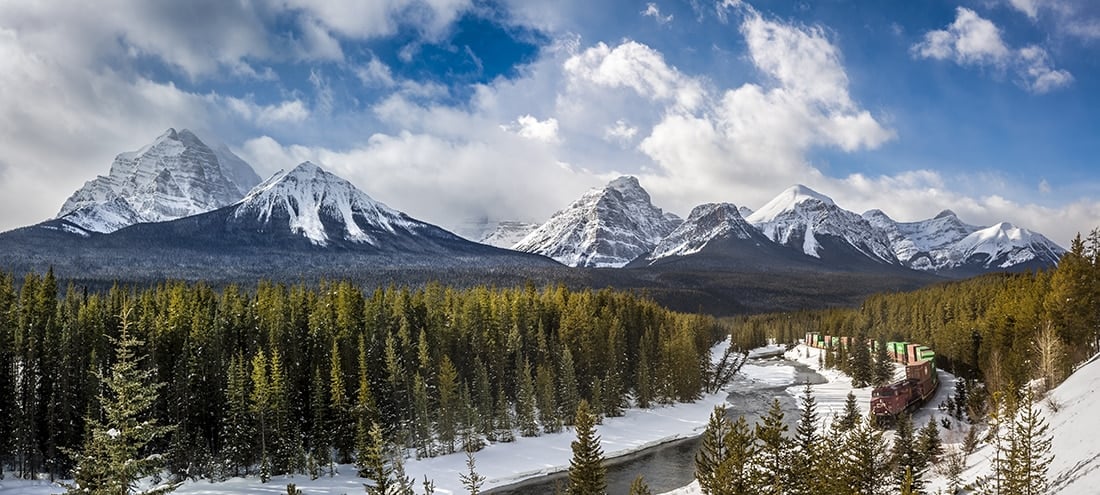
Morant’s Curve in Banff National Park is one of those places where time seems to slow, and a single photograph can hold the weight of an entire landscape’s history. In the image, the Bow Valley unfurls gently as the railway curve traces a graceful arc through the frame, guiding the eye toward layers of forested slopes and rugged, snow-dusted peaks beyond. There’s a quiet tension here between wilderness and human presence—the steel rails cutting through an otherwise untamed scene—yet it feels respectful, almost poetic, as if the land has allowed this small mark of passage. The light is everything. Soft morning or late-evening tones spill across the mountains, sculpting their ridges and pulling subtle blues and warm golds from the rock and sky. The trees stand dense and steadfast, their dark greens grounding the image and emphasizing the vast scale of the valley. What makes Morant’s Curve so powerful in a photograph is anticipation: the suggestion of movement without motion, the sense that a train could appear at any moment, briefly animating the stillness before disappearing again into the mountains. It’s a scene that invites patience and reflection, rewarding those who linger rather than rush. As a photograph, Morant’s Curve isn’t just about a famous viewpoint—it’s about balance, rhythm, and the enduring dialogue between nature and the journeys we carve through it, captured in a single, timeless frame.