Discover the fascinating world of bears as we explore the key differences between black bears and grizzly bears. Uncover their unique traits and habitats!
Physical Characteristics of Black Bears
Black bears (Ursus americanus) are the most common bear species in North America, recognized for their sleek, glossy fur and relatively modest size. These bears exhibit a considerable degree of colour variation, ranging from jet black to shades of brown, cinnamon, and even blonde. Despite their name, not all black bears sport a black coat. Their fur is often thick and shiny, providing an excellent adaptation for insulation and camouflage in their varied habitats.
An adult male black bear typically stands about 5 to 6 feet tall when on its hind legs and weighs between 150 and 600 pounds, with females being smaller, averaging around 90 to 300 pounds. Their bodies are more streamlined compared to grizzly bears, with longer, less muscled limbs and smaller, less pronounced shoulder humps. This physical build allows them to be agile climbers, able to scale trees with ease to escape danger or search for food.
One distinguishing feature of black bears is their straight facial profile and relatively large, pointed ears. They have shorter claws compared to grizzlies, usually about 1 to 2 inches long, which are better suited for climbing trees rather than digging. Their claws and paws are adapted to gripping and tearing open logs or other structures to find food, showing their versatility in various environments.
Physical Characteristics of Grizzly Bears
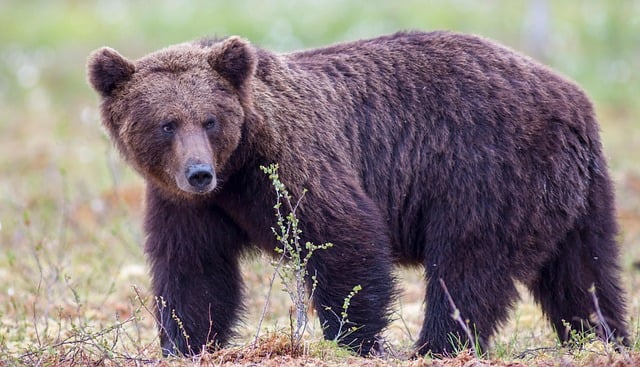
Grizzly bears (Ursus arctos horribilis), a subspecies of the brown bear, are known for their impressive size and distinctive physical traits. They typically have a more robust build compared to black bears, with adult males weighing between 400 and 1,200 pounds and standing about 6.5 to 8 feet tall when on their hind legs. Females are generally smaller, weighing between 290 and 440 pounds. The grizzly’s fur ranges from dark brown to lighter shades like blonde and even nearly white.
One of the most recognizable features of the grizzly bear is its prominent shoulder hump, which is a mass of muscle used to power their forelimbs for digging. This hump, combined with their concave facial profile, gives them a formidable appearance. Grizzlies also have smaller, rounded ears compared to black bears, a trait that adds to their distinctive look. The Boss Banff Bear is a Grizzly bear located in Banff National Park.
Grizzly bears possess long, curved claws that can grow up to 4 inches in length. These claws are less suited for climbing but are highly effective for digging roots, unearthing small mammals, and tearing apart logs to find insects. Their claws, coupled with their powerful forelimbs, make them adept at foraging and excavating in various terrains.
Behavioural Differences – Black Bear vs. Grizzly Bear
Black bears are generally more solitary and less aggressive compared to grizzly bears. They prefer to avoid confrontation and will often retreat or climb trees when threatened. Black bears are also more nocturnal, typically foraging for food during the night or at dawn and dusk. Their behaviour is influenced by their need to avoid larger predators and human encounters, which they achieve through their agility and climbing skills.
In contrast, grizzly bears are known for their more assertive and territorial behaviour. They are less likely to climb trees due to their larger size and longer claws, opting instead to stand their ground or intimidate potential threats. Grizzlies are more diurnal, meaning they are active during the day. This behaviour allows them to maximize their foraging efforts, particularly in open habitats where they can spot food sources from a distance.
Both species exhibit seasonal behaviours, such as hibernation during the winter months. However, grizzly bears tend to dig elaborate dens on mountain slopes or in forested areas, while black bears often use hollow trees or natural cavities. The differences in their denning habits reflect their distinct adaptations to their environments and survival strategies.
Habitat and Distribution of Black Bears
Black bears have a wide geographic range, spanning the forests, swamps, and mountainous regions of North America. They are found from Alaska to the northern parts of Mexico and from the Atlantic to the Pacific coasts. This extensive distribution is a testament to their adaptability to various climates and habitats.
In the eastern United States, black bears inhabit dense forests and swamps, where they can find ample cover and food sources such as berries, nuts, and insects. In the western regions, they are often found in mountainous areas with mixed coniferous and deciduous forests. Black bears are also known to venture into suburban areas in search of food, leading to occasional human-bear conflicts.
Their habitat preferences are influenced by the availability of food and cover. Black bears are highly adaptable and can thrive in a variety of environments, from the coastal rainforests of British Columbia to the hardwood forests of the southeastern United States. Their ability to exploit diverse food sources and habitats has contributed to their widespread presence across the continent.
Habitat and Distribution of Grizzly Bears
Grizzly bears are predominantly found in the western parts of North America, with their range extending from Alaska through western Canada and into the northwestern United States. They inhabit a variety of ecosystems, including alpine meadows, tundra, forests, and coastal regions. Their distribution is more limited compared to black bears, largely due to their specific habitat requirements and historical ranges.
In the United States, grizzly bears are primarily found in the Greater Yellowstone Ecosystem, the Northern Continental Divide in Montana, and parts of Idaho and Washington. They require large, undisturbed areas to roam and forage, which has led to their presence in some of the most pristine and remote wilderness areas. In Canada, grizzlies are more widespread, occupying regions from the Yukon and British Columbia to parts of Alberta.
Grizzly bears prefer habitats that offer abundant food sources and cover. They are often found near rivers and streams, where they can catch fish, particularly during salmon runs. Their preference for open and semi-open habitats with diverse vegetation reflects their need for a varied diet and their opportunistic foraging behaviour.
Diet and Feeding Habits: Black Bear vs. Grizzly Bear
Black bears are omnivorous and have a highly varied diet. They primarily feed on vegetation, including berries, nuts, fruits, and grasses. In the spring, they consume new plant growth and insects, while in the summer and fall, they focus on fruits and nuts to build up fat reserves for hibernation. Black bears also eat small mammals, carrion, and occasionally prey on young deer or livestock.
Grizzly bears, while also omnivorous, have a diet that reflects their larger size and greater territorial range. They consume a mix of plant and animal matter, with a significant portion of their diet consisting of meat. Grizzlies are known for hunting large mammals such as moose, elk, and deer, and they are also proficient fishers, particularly during salmon runs. Their diet includes roots, berries, insects, and carrion, making them opportunistic feeders.
The dietary differences between black bears and grizzly bears are influenced by their respective habitats and physical capabilities. Black bears are more likely to forage for food in forests and climb trees to access fruits and nuts, while grizzlies utilize their strength and agility to hunt and dig for food. These dietary habits reflect their adaptations to their environments and their roles as apex predators and key species in their ecosystems.
Reproduction and Lifespan: Black Bear vs. Grizzly Bear
Black bears typically mate from May to July, with females giving birth during hibernation in January or February. A female black bear usually gives birth to one to three cubs, which are born blind, hairless, and entirely dependent on their mother. The cubs stay with their mother for about 18 months, learning essential survival skills before becoming independent.
Grizzly bears have a similar reproductive cycle, with mating occurring from May to July. Females give birth during hibernation, usually to one to four cubs, which are also born blind and helpless. Grizzly cubs remain with their mother for about two to three years, during which they learn crucial foraging and hunting skills. The extended maternal care period reflects the grizzly bear’s need for more extensive learning and development.
Both black bears and grizzly bears have similar lifespans, typically living 20 to 25 years in the wild. However, their lifespans can be influenced by factors such as food availability, human interactions, and environmental conditions. In captivity, bears can live longer due to the absence of threats and a consistent food supply.
Conservation Status and Threats to Both Species
Black bears are currently listed as a species of least concern by the International Union for Conservation of Nature (IUCN), thanks to their widespread distribution and adaptability. However, they face several threats, including habitat loss, human-wildlife conflicts, and illegal hunting. Conservation efforts focus on habitat protection, public education, and conflict mitigation to ensure their long-term survival.
Grizzly bears, on the other hand, are listed as a species of concern in many parts of their range. In the contiguous United States, they are classified as threatened under the Endangered Species Act. Key threats to grizzly bears include habitat fragmentation, human encroachment, and climate change. Conservation initiatives involve habitat restoration, connectivity between bear populations, and reducing human-bear conflicts.
Both species benefit from protected areas and wildlife corridors that allow them to roam and forage without human interference. Public awareness and education are crucial in promoting coexistence and minimizing negative interactions. Ongoing research and monitoring are essential to understand their population dynamics and inform effective conservation strategies.
Conclusion: Key Takeaways on Black Bear vs. Grizzly Bear
Black bears and grizzly bears, while sharing some similarities, exhibit distinct physical characteristics, behaviours, and habitat preferences. Black bears are more agile climbers and tend to avoid confrontation, while grizzly bears are more territorial and assertive. Their respective diets and reproductive strategies reflect their adaptations to their environments and roles in their ecosystems.
Understanding the differences between these two bear species is essential for their conservation and coexistence with humans. Both species face significant threats from habitat loss and human activities, making conservation efforts and public education vital for their protection. By appreciating their unique traits and behaviours, we can foster a greater respect for these magnificent creatures and support efforts to preserve their natural habitats.
Through continued research, conservation initiatives, and public awareness, we can ensure that both black bears and grizzly bears thrive in the wild for generations to come. Their presence in our ecosystems is a testament to the diversity and resilience of wildlife, and their protection is a shared responsibility for all who value the natural world.