
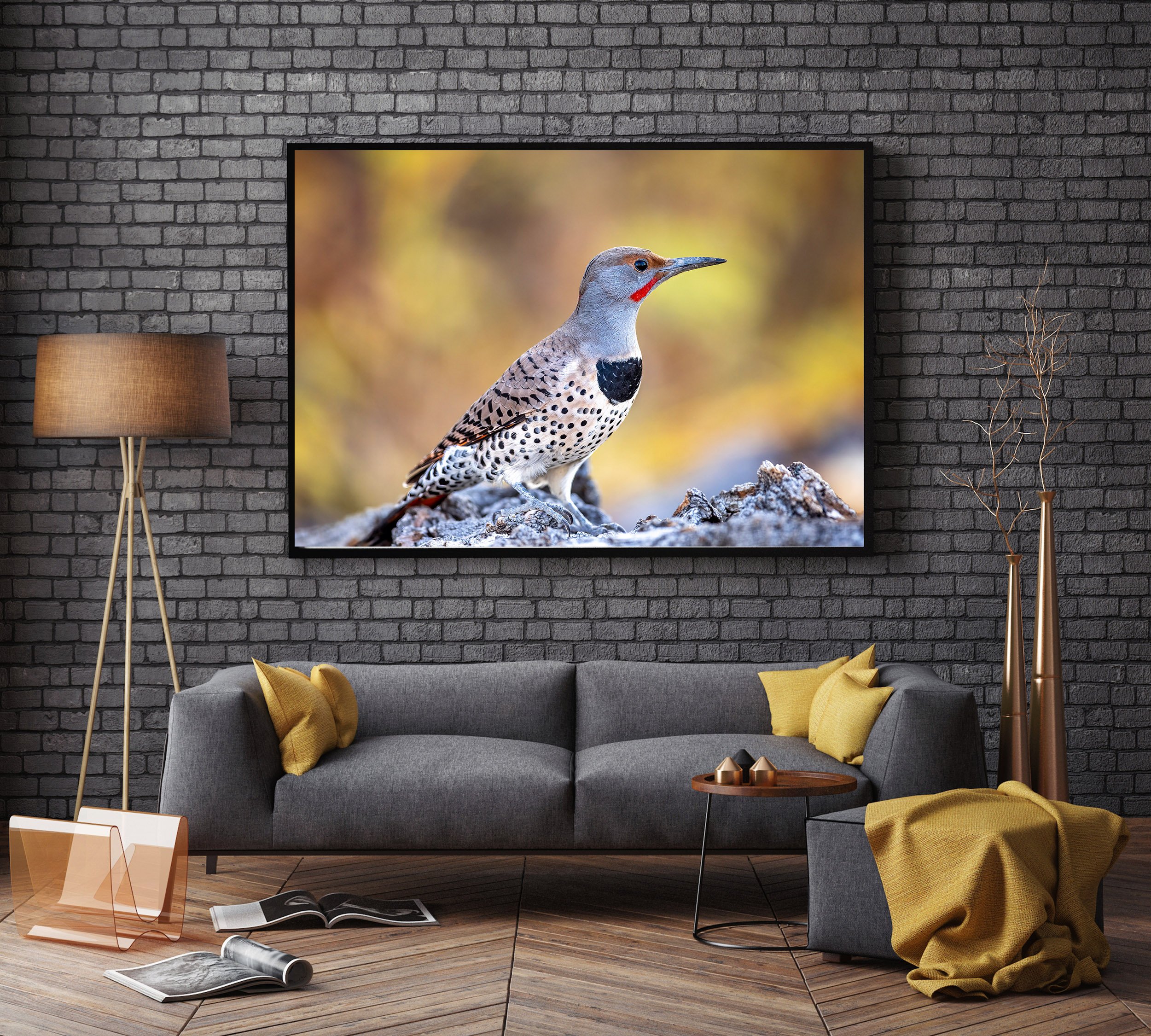
Northern Flicker Picture
Price range: $125.00 through $850.00
Northern Flicker Picture can be printed on Fine Art Paper, Canvas, Metallic or Acrylic. Fine art prints are available in four materials and five sizes. Frames are available by special order. Prices are available upon request. Shipping is added to special orders.
Description
This print can be printed on Fine Art Paper, Canvas, Metallic or Acrylic. Fine art prints are available in four materials and five sizes. Frames are available by special order. Prices are available upon request. Shipping is added to special orders.
Capturing the Beauty of the Northern Flicker Picture: Stunning Pictures and Fascinating Facts
The Northern Flicker, a striking member of the woodpecker family, enchants birdwatchers and nature enthusiasts alike with its vivid plumage and unique behaviours. Known for its distinctive black crescent on the chest and stunning spotted wings, this bird is a true gem in the avian world. But the beauty of the Northern Flicker extends beyond mere appearance; its captivating drumming and cheerful calls echo through forests and backyards, adding a lively soundtrack to nature’s masterpiece. In this article, we invite you to immerse yourself in the world of the Northern Flicker, showcasing stunning pictures that capture its vibrant spirit. Alongside these visuals, you’ll discover fascinating facts that reveal the quirks and intricacies of this remarkable bird. Whether you’re a seasoned birdwatcher or a curious novice, join us on this journey to celebrate the allure of the Northern Flicker and its remarkable role in the great tapestry of wildlife.
Physical Characteristics of the Northern Flicker
The Northern Flicker is a bird that truly stands out due to its distinctive and vibrant appearance. One of the most noticeable features of this bird is its plumage, which is adorned with a mix of brown, black, and white. The back and wings are intricately patterned with black bars, giving it a speckled look that is both striking and camouflaging in the dappled light of wooded areas. Additionally, the bird’s underparts are a warm beige colour, adorned with black spots that seem almost painted on by an artist’s careful hand. This combination of colours and patterns makes the Northern Flicker a visual delight for birdwatchers.
Adding to its distinctive look is the Northern Flicker’s black crescent-shaped mark on its chest, which is a key identifying feature. This mark, coupled with the red or yellow shafts of its feathers (depending on whether it is a red-shafted or yellow-shafted flicker), adds to the bird’s striking appearance. The red-shafted Northern Flicker, found mainly in the western parts of North America, has red feathers on the underside of its wings and tail, while the yellow-shafted variety, common in the eastern regions, has yellow feathers in these areas. This regional variation provides an additional layer of interest for those studying and observing these birds.
The Northern Flicker’s head is adorned with a gray crown and nape, and it possesses a slightly curved bill that is perfect for its insect-rich diet. This bill is not only a tool for foraging but also plays a crucial role in the bird’s drumming behaviour, which is both a means of communication and a method for excavating nesting sites. Their eyes are a deep, dark brown, giving them a keen and intelligent expression. Overall, the Northern Flicker’s physical characteristics not only contribute to its beauty but also to its adaptability and survival in various environments.
The Habitat and Range of the Northern Flicker
The Northern Flicker is a bird with a wide range, spanning across much of North America. It is a versatile species that has adapted to a variety of habitats, from dense forests to suburban backyards. This adaptability is one of the reasons for its widespread presence. In forests, Northern Flickers can be found in both deciduous and coniferous woodlands, often favouring areas with a mix of tree types. They are particularly fond of open woodlands and forest edges, where they can find ample food and nesting sites.
Beyond forests, Northern Flickers are also commonly seen in grasslands, orchards, and even urban areas. Their presence in these diverse habitats is a testament to their adaptability and resourcefulness. In suburban and urban settings, they often visit bird feeders and can be seen foraging on lawns for ants, one of their favourite foods. This ability to thrive in human-altered landscapes has helped to maintain their population numbers despite habitat changes.
The range of the Northern Flicker extends from Alaska and Canada in the north to the northern parts of Central America. During the breeding season, they are found throughout this range, but some populations migrate southward in the winter to escape the harsh northern climates. In the southern parts of their range, Northern Flickers are often year-round residents. This migratory behaviour adds another fascinating aspect to their life history, as they navigate long distances to ensure their survival. Understanding the habitat preferences and range of the Northern Flicker helps bird enthusiasts locate and appreciate these beautiful birds in their natural settings.
Behaviour and Social Structure
Northern Flickers exhibit a range of interesting behaviours that make them fascinating subjects for observation. One of the most notable behaviours is their drumming. Unlike many other woodpeckers, Northern Flickers often drum on metal surfaces such as chimneys and gutters. This behaviour is primarily a means of communication, used to establish territory and attract mates. The loud, resonant drumming can be heard over long distances, making it an effective way to broadcast their presence.
In addition to drumming, Northern Flickers are known for their distinctive calls. They produce a variety of sounds, including a loud, clear “wick-a-wick-a-wick” call and a softer “klee-yer” call. These vocalizations are used for communication between individuals, particularly during the breeding season. Males and females engage in a variety of vocal and physical displays during courtship, including head bobbing and tail spreading, which are both visually striking and communicative.
Northern Flickers are generally solitary birds outside of the breeding season, but they do exhibit some social behaviours. During the winter months, they may form small flocks, particularly in areas where food is abundant. These flocks can include other species of woodpeckers and birds, creating a mixed-species group that forages together. This social behaviour is beneficial as it increases the chances of locating food and provides safety in numbers. Overall, the behaviour and social structure of the Northern Flicker are complex and multifaceted, reflecting their adaptability and intelligence.
Diet and Feeding Habits
The diet of the Northern Flicker is quite varied, which is one of the reasons they can thrive in so many different habitats. One of their primary food sources is ants, which they forage for on the ground using their long, barbed tongues. This ground-foraging behaviour is somewhat unusual for woodpeckers, which are typically known for their tree-foraging habits. Northern Flickers will often be seen hopping across lawns and fields, probing the soil with their beaks to extract ants and other insects.
In addition to ants, Northern Flickers consume a wide range of other insects, including beetles, termites, and caterpillars. They also eat fruits and seeds, particularly during the fall and winter months when insects are less abundant. Berries, such as those from the dogwood and sumac plants, are a favourite food during these times. This omnivorous diet allows them to adapt to seasonal changes in food availability and ensures they have a steady food supply throughout the year.
Northern Flickers have also been observed visiting bird feeders, particularly those offering suet and sunflower seeds. This behaviour is more common in suburban and urban areas where natural food sources may be less abundant. Their ability to exploit a wide range of food sources is a key factor in their success as a species. By understanding the diet and feeding habits of the Northern Flicker, bird enthusiasts can better provide for these birds and attract them to their own backyards for closer observation.
Breeding and Nesting Practices
The breeding and nesting practices of the Northern Flicker are as intriguing as their physical and behavioural characteristics. Breeding season for these birds typically begins in late spring, with courtship displays starting as early as March. During this time, males engage in a variety of displays to attract females, including drumming, calling, and physical displays such as head bobbing and wing spreading. These displays are not only meant to attract a mate but also to establish and defend territory.
Once a pair has formed, they work together to select a nesting site. Northern Flickers are cavity nesters, meaning they excavate holes in trees to create their nests. They prefer dead or decaying trees, which are easier to excavate, but will also use live trees and even man-made structures such as utility poles. Both the male and female participate in the excavation process, using their strong bills to chip away at the wood. The resulting cavity is typically about 30 to 50 centimetres deep and lined with wood chips to provide a soft bed for the eggs.
The female Northern Flicker lays between 5 to 8 eggs, which are incubated by both parents for about 11 to 14 days. The chicks are born altricial, meaning they are helpless and require a great deal of care from their parents. Both the male and female take turns feeding the chicks, bringing them a diet rich in insects to ensure they grow quickly. The chicks fledge after about 24 to 27 days, but they continue to be fed by their parents for a few weeks after leaving the nest. The cooperative nature of their breeding and nesting practices highlights the strong pair bonds and parental investment that are characteristic of this species.
Fascinating Facts About the Northern Flicker
One of the most fascinating aspects of the Northern Flicker Picture is its migratory behaviour. While many populations are year-round residents, particularly in the southern parts of their range, northern populations often migrate southward for the winter. This migration is not as long-distance as that of many songbirds, but it is still a significant journey that requires a great deal of energy and navigation skills. Some Northern Flickers have been known to travel several hundred miles between their breeding and wintering grounds.
Another interesting fact about the Northern Flicker is its relationship with ants. Unlike many woodpeckers that primarily forage on trees, Northern Flickers spend a great deal of time on the ground searching for ants. They have been observed using a unique feeding technique where they flick their tongues rapidly to capture ants from the soil. This behaviour not only provides them with a rich source of food but also helps to control ant populations in their habitats. The barbed tongue of the Northern Flicker is specially adapted for this purpose, making them highly efficient ant hunters.
Northern Flickers also exhibit a fascinating behaviour known as “anting.” This involves the bird allowing ants to crawl over its body, which may help to remove parasites and condition their feathers. Some theories suggest that the formic acid produced by the ants acts as a natural insecticide, providing additional benefits to the bird. This behaviour is not unique to Northern Flickers, but it is relatively rare among birds and adds another layer of intrigue to their already complex behaviour patterns. These fascinating facts highlight the unique adaptations and behaviours that make the Northern Flicker such an interesting species to study and observe.
Tips for Photographing Northern Flickers
Getting Northern Flicker Pictures can be a rewarding experience for bird enthusiasts and photographers alike. To capture stunning images of these beautiful birds, it is essential to understand their behaviour and habitat preferences. One of the best times to photograph Northern Flickers is during the early morning or late afternoon when they are most active. These times of day also offer the best lighting conditions, with soft, diffused light that enhances the bird’s vibrant plumage without causing harsh shadows.
When setting up for a photography session, it is important to be patient and observant. Northern Flickers are often found foraging on the ground, so look for areas where ants and other insects are abundant. They are also attracted to bird feeders, particularly those offering suet and sunflower seeds, so setting up near a well-stocked feeder can increase your chances of capturing great shots. Using a telephoto lens will allow you to get close-up shots without disturbing the birds, and a tripod can help stabilize your camera for clear, sharp images.
Another tip for photographing Northern Flickers is to focus on their unique behaviours. Capturing images of a Northern Flicker drumming on a tree or metal surface, foraging for ants, or engaging in courtship displays can add a dynamic element to your photos. Pay attention to their vocalizations and movements, as these can provide clues about their next actions. By understanding and anticipating their behaviour, you can position yourself to capture those perfect moments that showcase the beauty and personality of the Northern Flicker.
Conservation Status and Efforts
The Northern Flicker is currently listed as a species of least concern by the International Union for Conservation of Nature (IUCN), meaning that it is not considered to be at immediate risk of extinction. However, like many bird species, Northern Flickers face several threats that could impact their populations in the future. Habitat loss due to deforestation and urban development is a significant concern, as it reduces the availability of suitable nesting and foraging sites. Pesticide use can also negatively affect their food supply by reducing insect populations.
Conservation efforts for Northern Flickers focus on habitat preservation and restoration. Protecting and managing forests, particularly those with a mix of tree types, is crucial for maintaining healthy populations. Efforts to create and preserve urban green spaces can also provide important habitats for these birds. Additionally, providing nesting boxes can help to compensate for the loss of natural nesting sites, particularly in areas where dead trees are removed for safety reasons. These boxes should be designed to mimic the natural cavities that Northern Flickers prefer and placed in suitable locations to attract breeding pairs.
Public education and awareness are also important components of Northern Flicker conservation. By educating people about the importance of these birds and the threats they face, conservation organizations can encourage more supportive behaviours, such as reducing pesticide use and preserving natural habitats. Citizen science programs, where individuals can report sightings and behaviours of Northern Flickers, also contribute valuable data that can inform conservation strategies. Through these combined efforts, we can help ensure that the Northern Flicker continues to thrive in our forests, fields, and backyards.
Conclusion: Appreciating the Northern Flicker
The Northern Flicker Picture are a remarkable bird that captivates the hearts of birdwatchers and nature enthusiasts with its stunning appearance and fascinating behaviours. From its distinctive plumage and unique feeding habits to its complex social structures and breeding practices, there is much to admire about this member of the woodpecker family. By taking the time to observe and appreciate these birds, we gain a deeper understanding of the intricate balance of nature and the important roles that each species plays within it.
Photographing Northern Flickers allows us to capture and share their beauty with others, fostering a greater appreciation for these incredible birds. Whether you are a seasoned photographer or a curious novice, the tips provided in this article can help you capture stunning images that showcase the Northern Flicker’s vibrant spirit. By understanding their behaviour and habitat preferences, you can position yourself to capture those perfect moments that highlight their unique characteristics.
Conservation efforts are essential to ensure the continued survival of Northern Flickers and the preservation of their habitats. By supporting habitat preservation, reducing pesticide use, and participating in citizen science programs, we can all contribute to the protection of these beautiful birds. As we celebrate the allure of the Northern Flicker, let us also commit to safeguarding the natural world that they, and countless other species, call home. Through appreciation and action, we can help to ensure that future generations will be able to enjoy the sight and sound of Northern Flickers drumming, calling, and foraging in our forests and backyards.
Related products
-
Bison Winter Coat
Price range: $125.00 through $850.00 Select options This product has multiple variants. The options may be chosen on the product page -
Canada Goose in Water
Price range: $125.00 through $850.00 Select options This product has multiple variants. The options may be chosen on the product page -
Bison Pasture
Price range: $125.00 through $850.00 Select options This product has multiple variants. The options may be chosen on the product page


