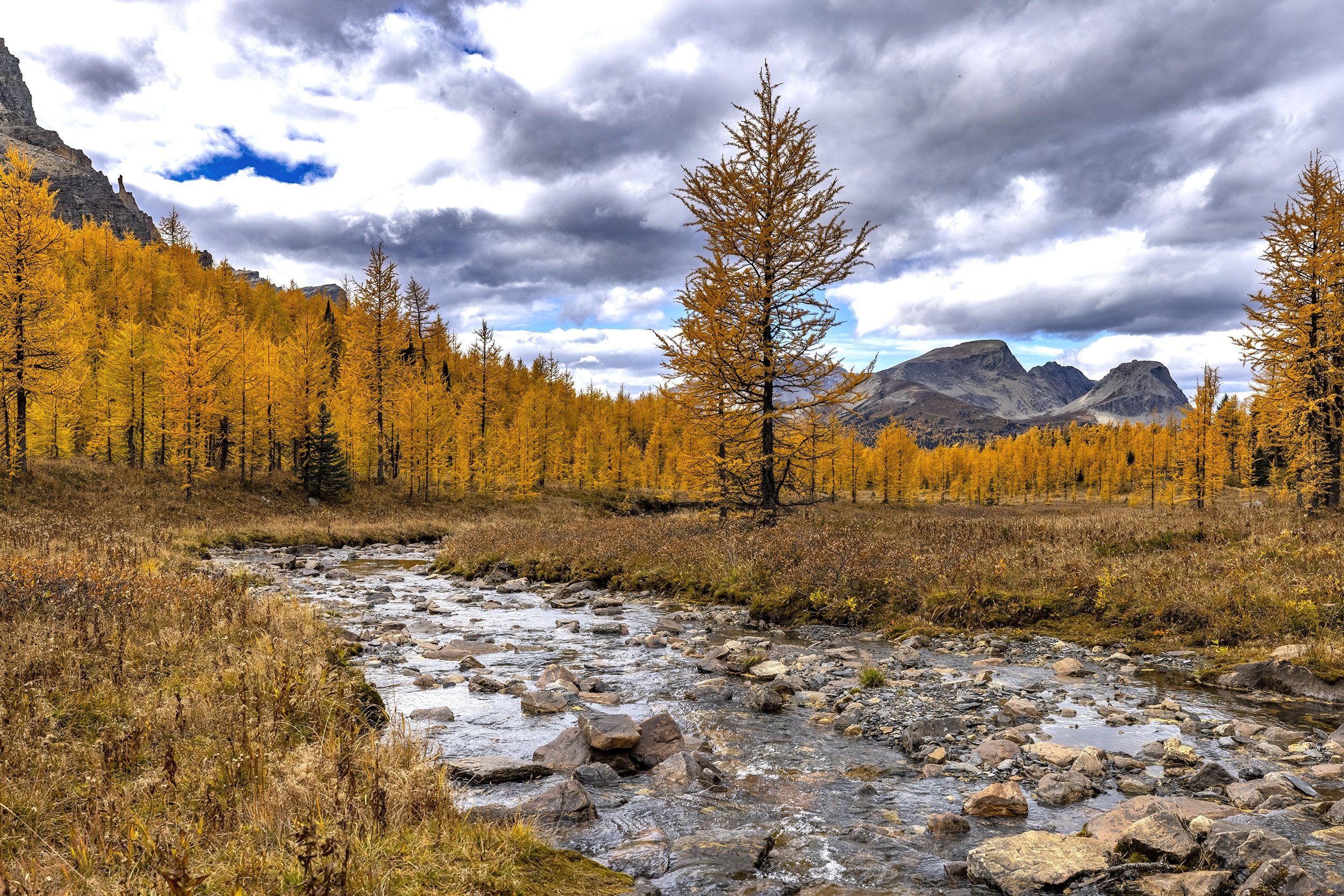

Stormy Larch Trees
Price range: $125.00 through $850.00
Larch Season Storm can be printed on Fine Art Paper; Canvas; Metallic or Acrylic. Fine Art paper is printed on Hahnemuhle Photo Rag is available in four sizes; the smaller prints (13×19 or 17×22) comes with a white or black archival mat that fits the image ready to be framed.
Description
Discover the Majestic Stormy Larch Trees: Nature’s Spectacle in Mount Assiniboine National Park
In the heart of British Columbia, where rugged mountains embrace pristine wilderness, the larch trees stand as nature’s captivating spectacle. Known for their striking golden glow during the fall, these resilient conifers transform Mount Assiniboine National Park into a breathtaking canvas of colour. As the seasons shift and the air turns crisp, thousands of visitors flock to witness this annual metamorphosis, where the vibrant hues of larch needles dance in the wind, creating a stunning contrast against the emerald evergreens and towering peaks. Whether you’re an avid hiker, a passionate photographer, or simply a lover of nature, the stormy larch trees offer an experience that transcends ordinary beauty. Embark on a journey through this alpine wonderland, and discover why these magnificent trees hold a special place in the hearts of those who are fortunate enough to encounter them. Your adventure awaits amid the awe-inspiring landscapes of Mount Assiniboine National Park!
The Unique Characteristics of Stormy Larch Trees
Nestled within the majestic Mount Assiniboine National Park, larch trees (Larix lyallii) stand out as a unique testament to nature’s resilience and beauty. Unlike most conifers, which remain evergreen throughout the year, larches are deciduous conifers. This means that they shed their needles seasonally, an uncommon trait that contributes to their distinctive appearance and allure. Their needles, soft and feathery compared to other evergreens, turn a brilliant golden hue in the fall, creating an awe-inspiring spectacle against the backdrop of the park’s rugged terrain.
One of the fascinating aspects of the stormy larch is its adaptive nature. These trees thrive in the harsh alpine environments where they are often subjected to extreme weather conditions, including heavy snowfall, strong winds, and low temperatures. Their ability to withstand such adversity is a testament to their evolutionary success. The larches’ deep root systems help anchor them securely to the rocky mountain slopes, allowing them to access essential nutrients and water while stabilizing the soil and preventing erosion.
In addition to their resilience, stormy larch trees exhibit a unique growth pattern. Typically, they can grow up to 30 meters tall and live for several centuries. Their tall, straight trunks and high branches create an open canopy, allowing ample sunlight to reach the forest floor, fostering a diverse understory of plants and providing critical habitat for various wildlife species. Each tree’s growth rings, visible in cross-sections, tell a story of the climatic conditions and environmental changes over the centuries, offering invaluable insights to researchers and nature enthusiasts alike.
The Phenomenon of Larch Tree Colour Change
The transformation of stormy larch trees in the fall is nothing short of magical. As the days shorten and temperatures drop, the chlorophyll in the larch needles gradually breaks down, revealing the underlying pigments of carotenoids, which produce the striking golden-yellow colour. This process, known as senescence, is a survival mechanism that allows the trees to conserve energy and resources during the winter months when photosynthesis becomes less efficient.
This colour change is not just a visual treat but also a signal of the intricate balance within the ecosystem. The needles’ transformation indicates the tree’s preparation for dormancy, where metabolic activities slow down significantly. This period of rest is crucial for the larch trees’ survival, ensuring they are ready to thrive once spring returns. The fallen needles contribute to the nutrient cycle, decomposing and enriching the soil with essential organic matter, which supports the growth of other plants and microorganisms in the forest.
Witnessing the larch trees’ metamorphosis is a profound experience for many visitors. The golden glow of the larches stands in stark contrast to the dark greens of the surrounding evergreens and the grey-blue hues of the towering mountains. This vibrant display often peaks in late September to early October, drawing nature lovers, photographers, and hikers who seek to immerse themselves in the beauty and tranquillity of this seasonal spectacle.
Best Times to Visit for Larch Viewing
Timing your visit to Mount Assiniboine National Park is crucial for the best larch viewing experience. The larch trees’ colour change is a relatively brief phenomenon, typically occurring over a few weeks in the fall. While the exact timing can vary each year depending on weather conditions, the last two weeks of September and the first week of October are generally considered the prime period for witnessing the golden transformation of the stormy larches.
The park’s high elevation means that the onset of fall comes earlier than in lower regions. Visitors planning a trip should keep an eye on weather forecasts and local reports from park authorities to catch the peak colour change. It’s worth noting that the park can experience early snowfall, which, while adding to the scenic beauty, can also make trails more challenging to navigate. Proper preparation and flexible travel plans can enhance your experience and ensure you don’t miss this fleeting but unforgettable display.
In addition to the fall, spring, and summer offer their own unique charms for visitors. In spring, the larch trees slowly awaken from their winter dormancy, with new needles emerging in a fresh green hue, a stark contrast to the golden fall colours. Summer provides a lush, green landscape with abundant wildflowers and vibrant ecosystems, making it an excellent time for hiking and exploring the park’s diverse trails. Each season offers a different perspective on the beauty and resilience of the larch trees, making Mount Assiniboine a year-round destination for nature enthusiasts.
Hiking Trails Featuring Stormy Larch Trees
Mount Assiniboine National Park boasts an extensive network of hiking trails that showcase the stunning beauty of the larch trees. One of the most popular routes is the Assiniboine Lodge to Lake Magog trail, which offers breathtaking views of the park’s signature peak, Mount Assiniboine, often referred to as the “Matterhorn of the Rockies.” This trail takes hikers through dense forests of larch and other conifers, providing ample opportunities to witness the golden spectacle of the larches in the fall.
Another notable trail is the Wonder Pass, which leads adventurers through alpine meadows, past crystal-clear streams, and up to elevated viewpoints that offer panoramic vistas of the surrounding mountains and valleys. The pass is particularly stunning in the fall when the larch trees are at their peak colour change, creating a golden carpet beneath the towering peaks. This trail is moderately challenging, making it suitable for experienced hikers looking for a rewarding day hike.
For those seeking a more strenuous adventure, the Naiset Huts to Nub Peak trail provides an exhilarating trek with dramatic elevation gains and sweeping views of the park’s diverse landscapes. The trail passes through several groves of stormy larch trees, offering prime opportunities for photography and quiet reflection amidst nature’s splendour. Each step along these trails reveals the intricate beauty of the park’s ecosystems, making every hike a memorable journey through one of Canada’s most picturesque natural settings.
Wildlife and Ecosystem Surrounding the Larch Trees
The stormy larch trees are an integral part of the rich and diverse ecosystem of Mount Assiniboine National Park. These trees provide essential habitat and food sources for a variety of wildlife species that call the park home. In the fall, as the larch needles turn golden and eventually fall, small mammals such as squirrels and chipmunks gather the fallen needles and seeds for their winter nests, contributing to the nutrient cycle within the forest.
Birds also benefit from the larch trees, with species such as the Clark’s nutcracker and the red crossbill relying on the seeds from the larch cones as a crucial food source. These birds play a vital role in seed dispersal, helping to propagate the larch trees and maintain the health of the forest. The open canopy created by the larch trees allows sunlight to penetrate to the forest floor, fostering a rich understory of plants and shrubs that support a diverse array of insects and other small creatures.
Larger mammals, including deer, elk, and even the occasional grizzly bear, can be spotted roaming through the larch forests. These animals are often drawn to the open areas created by the larches, where they graze on the abundant vegetation and seek shelter among the trees. The presence of these magnificent creatures adds to the park’s allure, offering visitors a chance to observe wildlife in their natural habitat while exploring the beauty of the stormy larch trees.
Photography Tips for Capturing Larch Trees
Photographing the larch trees in Mount Assiniboine National Park requires a blend of technical skill and creative vision. The golden hues of the larches provide a striking focal point, but capturing their beauty in a photograph can be challenging due to the dynamic lighting and vast landscapes. One of the key tips for successful larch photography is to visit during the early morning or late afternoon when the sunlight is softer and casts a warm glow over the trees, enhancing their golden colour.
Utilizing a polarizing filter can help reduce glare and enhance the contrast and saturation of the larch needles against the blue sky or the darker evergreens. This filter is particularly useful when photographing the larches reflected in the park’s pristine lakes, creating mirror-like images that capture the serene beauty of the landscape. Composition is also crucial; incorporating elements such as winding trails, mountain peaks, or wildlife can add depth and interest to your photos, drawing the viewer’s eye through the scene.
For those interested in close-up photography, a macro lens can capture the intricate details of the larch needles and cones, highlighting their texture and colour. Experimenting with different angles and perspectives can yield unique and creative images. Whether you are a seasoned photographer or a novice with a smartphone, the key is to be patient and take the time to observe the subtle changes in light and colour, allowing you to capture the essence of the stormy larch trees in all their splendour.
Conservation Efforts for Larch Trees in the Park
Preserving the larch trees and their surrounding ecosystems is a priority for Mount Assiniboine National Park. These trees face several threats, including climate change, which can alter the timing and intensity of seasonal changes, affecting the larches’ growth and colour transformation. Additionally, human activities such as hiking and camping can impact the delicate alpine environment, leading to soil erosion and habitat degradation if not managed responsibly.
Park authorities have implemented several conservation measures to protect the larch trees and their habitats. These include maintaining well-marked trails to minimize off-trail hiking, which can damage the fragile vegetation and disturb wildlife. Educational programs and guided tours are offered to raise awareness among visitors about the importance of preserving the park’s natural resources and promoting responsible outdoor practices.
Research and monitoring efforts are also crucial components of the park’s conservation strategy. Scientists study the growth patterns, health, and reproduction of the larch trees to understand how they respond to environmental changes and stressors. This data helps inform management decisions and conservation actions to ensure the long-term survival of the stormy larches and the overall health of the park’s ecosystems. By supporting these efforts and practicing Leave No Trace principles, visitors can contribute to the preservation of this magnificent natural wonder for future generations.
Visitor Information: Access and Amenities
Mount Assiniboine National Park is a remote and pristine wilderness area, accessible primarily by hiking or helicopter. For those planning to hike into the park, several trailheads offer access points, including the Mount Shark Trailhead and the Sunshine Village Trailhead. Both routes provide stunning scenery and opportunities to experience the park’s diverse landscapes, but they require proper preparation and physical fitness due to the challenging terrain and elevation gains.
Helicopter access is available from Canmore and Mount Shark, offering a unique and less strenuous way to reach the park. This option is particularly popular among visitors with limited time or those seeking a more comfortable journey. Once in the park, accommodation options include the historic Assiniboine Lodge, which provides cozy cabins and hearty meals, and the Naiset Huts, which offer more rustic accommodations for backpackers. For those who prefer camping, several designated campgrounds are available, each equipped with basic amenities such as bear-proof food storage, pit toilets, and water sources.
Visitors should be well-prepared for changing weather conditions, as the park’s high elevation can result in sudden temperature drops and snowfall, even in the fall. Packing appropriate clothing, gear, and supplies is essential for a safe and enjoyable visit. It’s also important to familiarize yourself with the park’s regulations and guidelines to ensure the protection of the natural environment and the safety of all visitors. With careful planning and respect for nature, a visit to Mount Assiniboine National Park offers an unforgettable experience amid the splendour of the stormy larch trees.
Conclusion: Embracing the Beauty of Nature’s Spectacle
The larch trees of Mount Assiniboine National Park offer a breathtaking display of nature’s beauty and resilience. Their unique characteristics, from the seasonal colour change to their adaptability in harsh alpine environments, make them a captivating subject for nature lovers, hikers, and photographers alike. The golden transformation of the larches in the fall is a sight to behold, drawing visitors from around the world to experience this fleeting yet unforgettable spectacle.
Exploring the park’s diverse hiking trails, observing the rich wildlife, and capturing the beauty of the larches through photography are just a few of the ways to immerse yourself in this natural wonder. The park’s conservation efforts ensure that the stormy larch trees and their ecosystems are protected for future generations, allowing everyone to appreciate the importance of preserving our natural heritage.
Whether you seek adventure, tranquillity, or inspiration, a journey to Mount Assiniboine National Park promises to be a memorable experience. The stormy larch trees stand as a testament to the awe-inspiring power of nature, inviting all who visit to embrace the beauty and wonder of this majestic landscape. Your adventure awaits—come and discover the magic of the larch trees in one of Canada’s most spectacular national parks.
You may also like…
-
Magog Lake Stars
Price range: $125.00 through $850.00 Select options This product has multiple variants. The options may be chosen on the product page -
Mount Assiniboine Cabins
Price range: $125.00 through $850.00 Select options This product has multiple variants. The options may be chosen on the product page -
Nublet View
Price range: $125.00 through $850.00 Select options This product has multiple variants. The options may be chosen on the product page


Related products
-
Bison Grazing
Price range: $125.00 through $850.00 Select options This product has multiple variants. The options may be chosen on the product page -
Bison Race
Price range: $125.00 through $850.00 Select options This product has multiple variants. The options may be chosen on the product page -
Canada Goose in Water
Price range: $125.00 through $850.00 Select options This product has multiple variants. The options may be chosen on the product page


