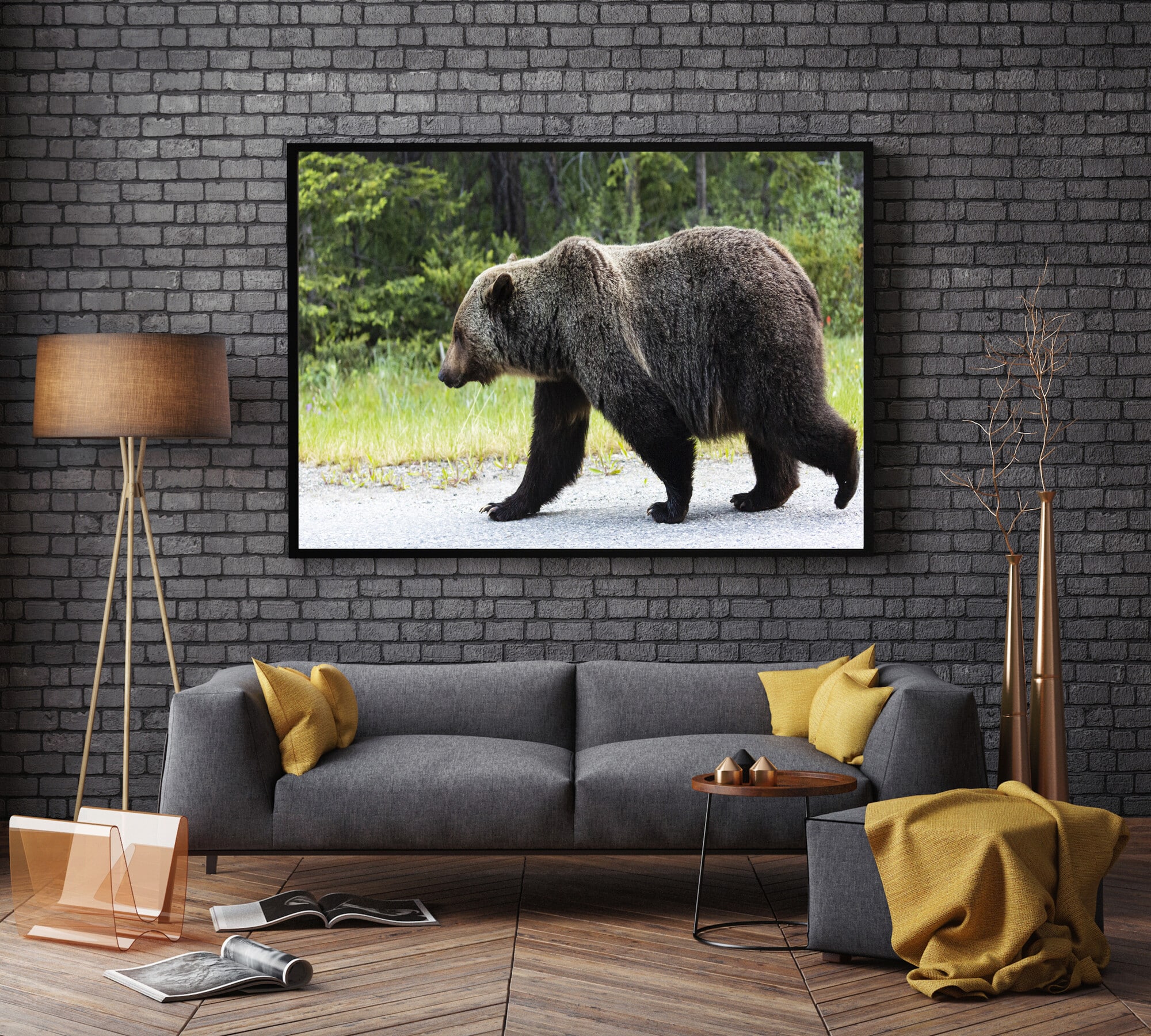
The Boss Banff Bear
Price range: $125.00 through $850.00
The Boss Banff Bear can be printed on Fine Art Paper, Canvas, Metallic or Acrylic. Fine art prints are available in four materials and five sizes. Frames are available by special order. Prices are available upon request. Shipping is added to special orders.
Description
This print can be printed on Fine Art Paper, Canvas, Metallic or Acrylic. Fine art prints are available in four materials and five sizes. Frames are available by special order. Prices are available upon request. Shipping is added to special orders.
Meet the Boss Banff Bear: The Majestic Monarch of the Canadian Rockies
In the heart of our Canadian Rockies, a true icon reigns supreme: the Boss. This majestic creature embodies the unyielding spirit of the wild, captivating visitors with its awe-inspiring presence and elusive nature. Renowned for its striking beauty and unparalleled strength, the Boss Banff Bear represents more than just a magnificent animal; it symbolizes our breathtaking landscape of Banff National Park itself. As you embark on a journey through this stunning realm, you’ll discover the stories and legends that weave a bear into the fabric of Canada’s natural heritage. Join us as we delve into the life of this remarkable monarch, exploring its habitat, behaviour, and the crucial role it plays in maintaining the ecological balance of our Canadian Rockies. Whether you’re a wildlife enthusiast, a passionate photographer, or simply seeking an unforgettable adventure, this story of the Boss Banff Bear is sure to inspire and ignite a deeper appreciation for the wild beauty that surrounds us.
The Importance of Bears in the Canadian Rockies Ecosystem
Bears hold a pivotal role in the intricate web of our Canadian Rockies ecosystem. As apex predators, they are at the top of the food chain, helping to maintain the balance of the animal populations beneath them. Their predation helps control the number of herbivores like deer and elk, which in turn prevents overgrazing and allows vegetation to flourish. This balance ensures a healthy and diverse biosphere, where each species can thrive in its niche. Without bears, this delicate equilibrium of these ecosystems could be disrupted, leading to unforeseen consequences on both flora and fauna.
In addition to their role as predators, bears are also considered ecosystem engineers. Their foraging behaviour, which includes digging for roots and bulbs or overturning logs in search of insects, helps to aerate the soil. This natural tilling process promotes plant growth and nutrient cycling, enhancing the overall health of the forest floor. Seeds that bear disperse through their scat further contribute to forest regeneration. This cycle of consumption and dispersal is crucial for maintaining the dynamic and diverse plant communities that characterize the Canadian Rockies.
Moreover, bears serve as an indicator species, reflecting the overall health of our environment. Healthy bear populations signify a well-functioning ecosystem with abundant food, clean water, and minimal human disturbance. Conversely, a decline in bear numbers can signal environmental degradation, prompting conservationists to investigate and address the underlying issues. By understanding and protecting bears, we are also safeguarding our broader ecosystem, ensuring that the natural beauty and biodiversity of our Canadian Rockies are preserved for future generations.
A Closer Look at this Bear’s Habitat
The Boss roams an extensive and varied habitat within Banff National Park, a pristine wilderness renowned for its breathtaking landscapes. This majestic bear primarily inhabits the dense coniferous forests, alpine meadows, and rugged mountainous regions that define this park. These habitats provide essential elements for its survival, including shelter, food sources, and areas for raising its young. The rich biodiversity of Banff National Park ensures that this Bear has access to a plentiful and varied diet, crucial for its sustenance and health.
The park’s diverse terrain includes lush valleys, towering peaks, and glacial-fed rivers, each contributing to this bear’s habitat needs. In our lower elevations, dense forests of spruce and fir offer cover and foraging opportunities. During our warmer months, alpine meadows burst into a riot of wildflowers, providing a rich source of nutrition from plants and insects. At higher elevations, often snow-covered even in summer, offer cooler retreats and are ideal spots for summer denning. Water bodies such as rivers and lakes are vital, not just for hydration but also as sources of fish and other aquatic prey.
Seasonal changes significantly influence the bear’s habitat use. During spring, this bear emerges from hibernation and moves to lower elevations, where snow melts first, revealing new plant growth and awakening small animals. As summer progresses, this bear ascends to higher elevations, following the growth of alpine flora and seeking cool respite from the heat. In autumn, this bear prepares for hibernation by feasting on abundant berries and nuts found in the forests. Understanding these seasonal movements is critical for ensuring a bear’s habitat needs are met throughout the year.
Unique Characteristics of the Boss Banff Bear
This bear is distinguished by several unique characteristics that set it apart from other bear species. One of this bear’s most striking features is its size; this Bear is considerably larger than most average black bears, with some individuals weighing up to 600 pounds or more. This immense size is a testament to its success in finding and utilizing the abundant food resources within Banff National Park. Its powerful build and muscular frame enable it to traverse the rugged terrain of our Rockies with ease, showcasing its incredible strength and adaptability.
Another distinctive trait of this Bear is its coat, which can range in colour from dark brown to almost black. Dense fur provides insulation against the harsh mountain climate, protecting it from the cold and wet conditions often encountered in the high elevations. This bear’s coat also plays a role in camouflage, allowing it to blend seamlessly into the forest understory and rocky outcrops. This natural disguise is crucial for both hunting and avoiding potential threats, demonstrating a bear’s evolutionary adaptations to its environment.
Behaviorally, the Boss Banff Bear exhibits remarkable intelligence and curiosity. It is known for its problem-solving abilities, whether it is foraging for food or navigating through human-altered landscapes. The bear’s keen sense of smell is one of its most vital tools, capable of detecting food sources from miles away. This heightened olfactory sense, combined with its acute hearing and sharp vision, makes this Bear an adept and versatile predator. These unique characteristics not only define a bear’s survival strategy but also contribute to its awe-inspiring presence in our Canadian Rockies.
The Life Cycle of the Boss Banff Bear
The life cycle of this Bear is a fascinating journey that begins with birth in the depths of winter. Female bears, known as sows, give birth to cubs while hibernating in their dens. These dens are typically located in secluded and protected areas, such as dense forests or beneath fallen trees. The cubs are born blind, hairless, and utterly dependent on their mother for warmth and nourishment. The sow’s body provides the necessary heat and sustenance through her rich milk, allowing cubs to grow rapidly during the winter months.
As spring arrives and the snow begins to melt, the mother bear and her cubs emerge from the den. This period marks a critical time for the cubs as they begin to explore their surroundings and learn vital survival skills. The mother bear is their primary teacher, showing them where to find food, how to identify danger, and the intricacies of their habitat. The cubs stay with their mother for up to two years, during which they develop the skills necessary to live independently. This nurturing period is crucial for their survival, as it prepares them for the challenges they will face as adults.
Once the cubs reach maturity, they set out to establish their own territories. Male bears tend to roam larger areas, often overlapping with the ranges of multiple females. This territorial behaviour is essential for mating, which occurs in late spring to early summer. The Boss Banff Bear, like other bear species, exhibits delayed implantation, where the fertilized egg does not immediately implant in the uterus. This adaptation ensures that the cubs are born during a time when survival conditions are optimal. The life cycle of this bear, from cub to adult, is a testament to its resilience and adaptability of this magnificent animal.
Conservation Efforts for Bears in Banff National Park
Conservation efforts for bears in Banff National Park are critical to ensuring its survival of these majestic creatures. This park is home to both black bears and grizzly bears, each facing unique challenges that threaten their populations. Human activities, such as urban development, tourism, and transportation networks, have fragmented bear habitats and increased the risk of human-wildlife conflicts. To mitigate these threats, conservationists have implemented a range of strategies aimed at preserving bear habitats and promoting coexistence between bears and humans.
One of the key initiatives is our creation of wildlife corridors and crossings. These structures, such as overpasses and underpasses, are designed to provide safe passages for bears and other wildlife across busy highways and railways. By connecting fragmented habitats, our corridors help maintain genetic diversity and reduce its risk of road mortality. Additionally, the park has established buffer zones around critical habitats to limit human activities that could disturb or displace bears. These measures are essential for maintaining the integrity of bear populations and ensuring their long-term survival.
Public education and awareness campaigns are also vital components of bear conservation in Banff National Park. Visitors to our park are encouraged to practice bear-safe behaviours, such as storing food properly, disposing of waste responsibly, and maintaining a safe distance from bears. Educational programs and interpretive signs provide information on bear behaviour and the importance of conservation efforts. By fostering a culture of respect and understanding, these initiatives aim to reduce human-bear conflicts and promote peaceful coexistence. Collective efforts of conservationists, park authorities, and our public are crucial for safeguarding the future of this Bear and its habitat.
How to Safely Observe Bears in the Wild
Observing bears in the wild can be a thrilling and unforgettable experience, but it is essential to prioritize safety for both humans and bears. Our first rule of bear watching is to maintain a respectful distance. Bears are wild animals, and getting too close can provoke defensive behaviour. It is recommended to observe bears from at least 100 meters away, using binoculars or a telephoto lens to get a closer look. This distance ensures that a bear does not feel threatened and allows you to enjoy the sighting without disturbing its natural behaviour.
When exploring bear habitats, it is important to stay vigilant and make your presence known. Bears often avoid humans if they are aware of their approach, so making noise by talking, clapping, or using bear bells can help prevent surprising a bear at close range. Travelling in groups is also safer, as bears are less likely to approach multiple people. Always stay on marked trails and avoid areas with dense vegetation where visibility is limited. If you encounter a bear, remain calm, back away slowly, and do not run, as this can trigger a chase response.
Carrying bear spray is a crucial precaution when venturing into bear country. Bear spray is a non-lethal deterrent that can be effective in stopping an aggressive bear. It should be easily accessible, and you should know how to use it properly. In the event of an encounter, aim for the bear’s face and discharge the spray in short bursts. Understanding bear behaviour can also enhance your safety; for example, a bear standing on its hind legs is usually trying to get a better view rather than preparing to attack. By following these guidelines, you can safely enjoy the awe-inspiring presence of bears in their natural habitat.
The Role of this Bear in Local Culture and Tourism
This Bear holds a special place in our local culture and tourism of Banff National Park. This iconic animal is a symbol of the wild beauty and untamed spirit of our Canadian Rockies, drawing visitors from around the world. This bear’s majestic presence has inspired countless stories, legends, and artworks, deeply embedding it in the cultural fabric of the region. Indigenous peoples, who have lived in harmony with the land for thousands of years, hold this bear in high regard, viewing it as a powerful spiritual symbol and a guardian of our wilderness.
Tourism in Banff National Park is significantly influenced by this Bear’s allure. Wildlife enthusiasts, photographers, and nature lovers flock to our park with the hope of catching a glimpse of this magnificent creature. Guided tours and wildlife safaris offer opportunities to learn about bear behaviour and conservation efforts, providing an educational and immersive experience. This bear’s presence enhances our park’s reputation as a premier destination for wildlife viewing, contributing to our local economy through tourism-related businesses such as hotels, restaurants, and souvenir shops.
This bear’s role in tourism also underscores the importance of sustainable practices to ensure that human activities do not harm our wildlife that attracts visitors. Responsible tourism initiatives, such as eco-friendly accommodations and ethical wildlife viewing guidelines, are crucial for minimizing our impact on bear habitats. By promoting a culture of respect and conservation, the tourism industry can support the preservation of the Bear and its environment. A bear’s significance in local culture and tourism highlights our interconnectedness with nature, heritage, and economic well-being in Banff National Park.
Fun Facts About Bears in Banff National Park
Bears in Banff National Park are fascinating creatures, with many intriguing facts that add to their allure. For instance, did you know that bears have an incredible sense of smell, estimated to be over 2,000 times more sensitive than humans? This remarkable olfactory ability allows them to detect food sources from great distances and plays a crucial role in their survival. Additionally, bears are excellent swimmers and can cross rivers and lakes with ease, showcasing their adaptability to diverse habitats.
Another interesting fact is that bears are known for their long periods of hibernation, which can last up to seven months in our Canadian Rockies. During hibernation, bears do not eat, drink, or excrete waste. Instead, they rely on their fat reserves, which they accumulate during our summer and fall. This metabolic adaptation is vital for surviving the harsh winter conditions when food is scarce. Cubs are born during hibernation, and the mother bear’s body undergoes remarkable physiological changes to nourish the growing cubs.
Bears also exhibit a phenomenon known as “delayed implantation,” where the fertilized egg does not immediately implant in the uterus. This adaptation ensures that cubs are born during a time when survival conditions are optimal, typically in late winter or early spring. Moreover, bears are known for their playful behaviour, especially among cubs. Play-fighting, climbing trees, and splashing in water are common activities that help young bears develop physical skills and social bonds. These fun facts highlight the incredible adaptations and behaviours that make bears such captivating animals in Banff National Park.
Conclusion: Legacy of the Boss Banff Bear
This Bear stands as a majestic symbol of our wild beauty and the ecological significance of our Canadian Rockies. Its presence is a reminder of its intricate connections between all living beings and the natural environment. Through its role as an apex predator, ecosystem engineer, and cultural icon, this Bear embodies the spirit of Banff National Park. Its life cycle, unique characteristics, and the challenges it faces underscore the importance of conservation efforts to ensure this remarkable creature.
Our legacy of this Bear is intertwined with the health of our entire ecosystem. By protecting its habitat and promoting sustainable practices, we are also safeguarding our diverse plant and animal communities that depend on this environment. Public education and awareness are crucial for fostering a culture of respect and coexistence, ensuring that future generations can continue to marvel at the beauty of this Bear. As we celebrate this iconic animal, we are reminded of our responsibility to preserve our natural world for the benefit of all species.
In the heart of our Canadian Rockies, this Bear reigns supreme, a testament to its power and resilience of nature. Its story is one of survival, adaptation, and the delicate balance of life in the wild. Whether you are a wildlife enthusiast, a passionate photographer, or simply seeking an unforgettable adventure, this Bear offers inspiration and a deeper appreciation for our natural world. As we honour its legacy, we are reminded of the enduring beauty and wonder of our Canadian Rockies and the importance of protecting this precious wilderness for generations to come.
Related products
-
Male Bison in Fall
Price range: $125.00 through $850.00 Select options This product has multiple variants. The options may be chosen on the product page -
Bison Head
Price range: $125.00 through $850.00 Select options This product has multiple variants. The options may be chosen on the product page -
Beaver Eating Tree
Price range: $125.00 through $850.00 Select options This product has multiple variants. The options may be chosen on the product page