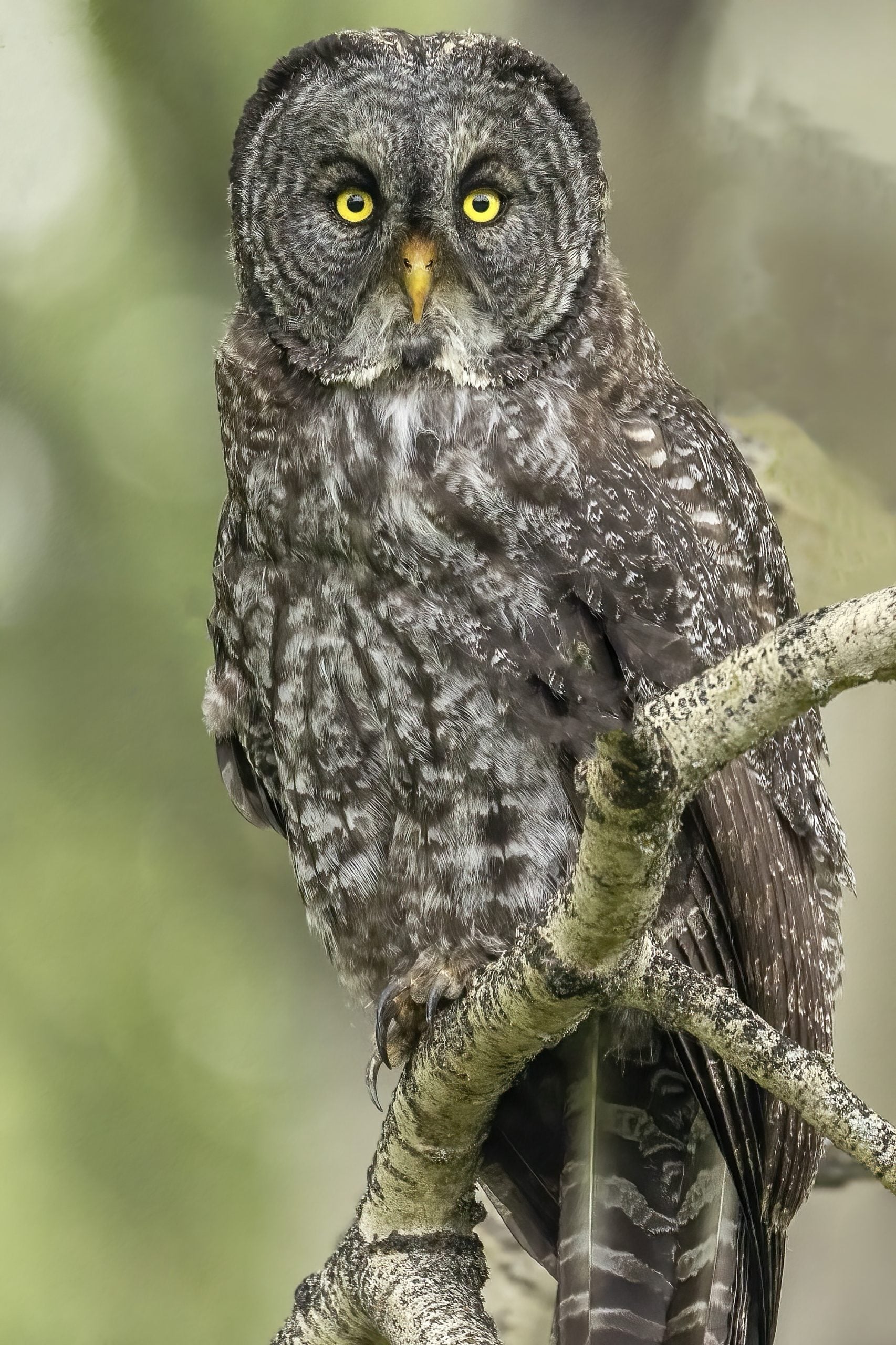
Great Gray Sitting
Price range: $125.00 through $850.00
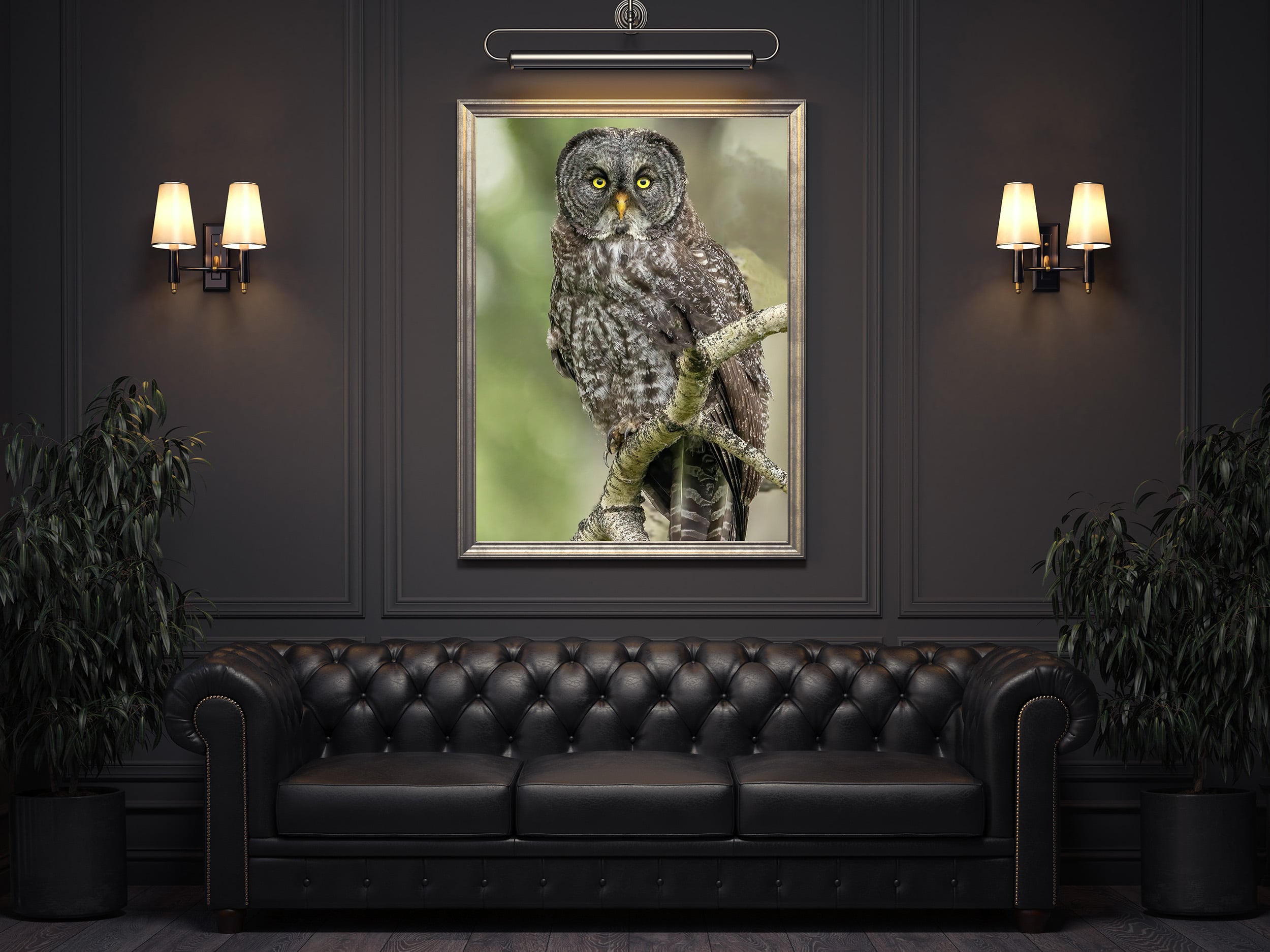
Great Gray Sitting can be printed on Fine Art Paper; Canvas; Metallic or Acrylic. Fine Art print is available in four materials in five sizes; Frames are available via special order; Prices are available on request; Shipping is added on top of special orders.
Description
Great Gray Sitting
This print can be printed on Fine Art Paper, Canvas, Metallic or Acrylic. Fine Art print is available in four materials in five sizes; Frames are available via special order; Prices are available on request; Shipping is added on top of special orders.
Great Gray Owl Sitting
Great Gray Sitting features the Great Gray Owl, Strix nebulosa—the largest owl in the world by length and the tallest owl species in North America—making it a striking choice for art and nature lovers, wildlife print collectors, and home decorators looking for fine art centered on one of the continent’s most distinctive birds. Great Gray Owls are found across the northern hemisphere, with great gray owl distribution extending through the boreal forests of North America, especially Canada and the north. Great Gray Owls are nocturnal, and like most owls they do much of their hunting at night, although they can also hunt at dawn or dusk.
This species is known for its broad, flat facial discs, bright yellow eyes, and large round head, while its dense feathers and bark-like plumage help it stay insulated and nearly invisible against tree trunks. That facial disk also helps the owl search for prey, allowing it to hear movement from over 300 feet away.
For readers who want both a closer look at the bird and a wildlife print worth displaying, this piece highlights the Great Gray Owl’s habitat, diet, nesting, and hunting behavior along with the fine art print options available. It often uses a sit-and-wait strategy from a perch, remaining motionless for long periods before dropping on rodents. Prey can be located beneath snow, and with silent flight and powerful talons, the owl can break through the snow crust to capture it.
Nesting: Great Gray Owl Research
During courtship, the male feeds the female as nesting pairs form, and they also preen one another. During nesting, Great Grays use abandoned nest sites of other birds such as Ospreys, Hawks and Ravens, including old stick nests, and they may also use broken topped snags with broken tops rather than build their own. They usually build their nests between 20 and 50 feet above the ground, and can be aggressive when defending them from raptors and other owls, including great horned owls.
A female lays between two and five eggs every year. During incubation, the female sits on the eggs for 30 days. For two to three weeks, the female will tend to the young while the male brings food. After 3 to 4 weeks, a young bird may climb out of the nest or a nearby tree, and some may fall to the ground before they can fly.
Young will fly in 5 to 6 weeks. When the female leaves the young, the male will take care of them for up to three months.
Diet
Small mammals, especially rodents, are the main food source for the Great Gray Owl. It primarily feeds on voles in northern areas and may eat 6-8 voles per day. Diet also consists of:-
-
Gophers
-
Mice
-
Rats
-
Shrews
-
Squirrels
-
Weasels
-
Chipmunks
-
Small Birds
-
Frogs
Habitat in North America
To nest and sleep, Great Gray Owls prefer dense, wet evergreen coniferous forests, especially in mature forest habitat that includes pine. To hunt, they use meadows, montane meadows, and other open areas near the woods, because they require nearby open areas to find small rodents. They also hunt around bogs, clearings, and burnt forests, as well as open areas at the edges of cover. Before striking, they often perch on dead snags, broken trees, branches, or a post overlooking these feeding grounds. In winter, they may shift to lower elevation mixed habitat as snow conditions change.
Across North America, populations are estimated at about 10,000 to 50,000 birds, with Partners in Flight placing the global breeding total near 120,000; population trends remain hard to track, but the species is considered vulnerable in Canada, sensitive in the U.S., rated 9 out of 20 for conservation concern, and threatened in part by deforestation.
Related products
-

American Robin
Price range: $125.00 through $850.00 Select options This product has multiple variants. The options may be chosen on the product page -
Bison Race
Price range: $125.00 through $850.00 Select options This product has multiple variants. The options may be chosen on the product page -
Bison Calf
Price range: $125.00 through $850.00 Select options This product has multiple variants. The options may be chosen on the product page -
Young Great Horned Owl
Price range: $125.00 through $850.00 Select options This product has multiple variants. The options may be chosen on the product page


