Introduction: What “Quality Prints” Really Mean Today
We scroll through hundreds of photos a day on phones and social media, yet none of them stop us the way a carefully printed photograph on a living room wall does. In 2026, physical prints still carry an emotional weight that screens simply cannot replicate. That difference comes down to quality prints-and understanding what that term actually means before you spend a dollar.
Quality photo prints are defined by four measurable attributes: accurate colour reproduction, sharp detail at the intended viewing distance, archival longevity (measured in decades, not months), and an appropriate print size that suits the space. When all four come together, a photograph transforms from a digital file into art you live with.
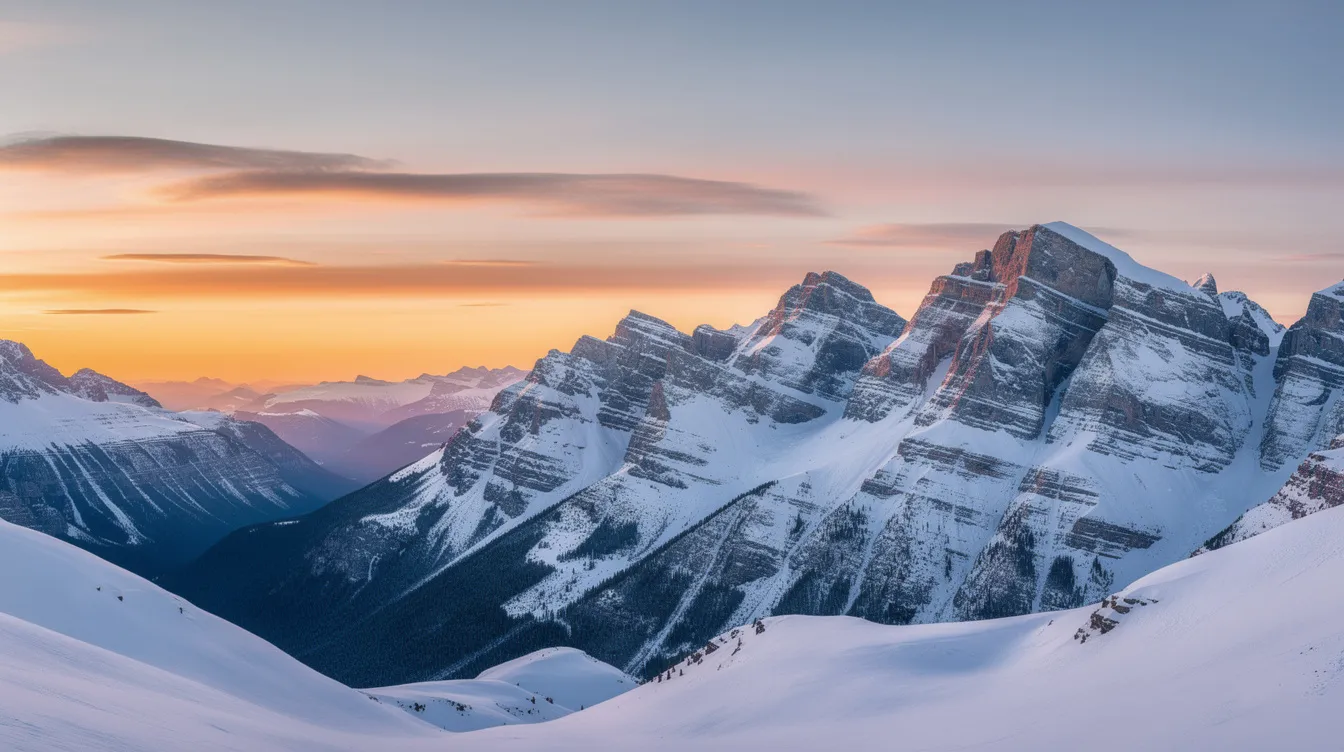
At Jardene Photography, we specialize in premium photo prints of Alberta’s wild places-bison on frosty prairies, the Canadian Rockies at dawn, aurora arcing over dark forests. Every image is produced through our professional lab partnership with ArtBeat Studios using archival materials, backed by a 100% Satisfaction Guarantee and a commitment to donate 15% of profits to the Alberta Institute for Wildlife Conservation.
This article gives you a fast answer on how to get high quality photo prints through online photo printing services or fine art labs, then dives deeper into paper types, print sizes, finishes, file preparation, and display tips so you can make confident decisions.
Fast Answer: How to Get High Quality Photo Prints Right Now
If you want a direct, step-by-step answer before the theory, here it is.
Four steps to a great print:
- Pick your favourite photos. Make sure the source file is at least 300 dpi at the final print size-a high quality photo from a modern camera or well-shot phone image will work.
- Choose a printing service. Decide between a general online photo printing service (convenient, wide range) or a fine art printer (archival materials, colour accuracy). Online services allow easy photo uploads from home, and same-day photo prints are available at select services for standard sizes like 4×6 and 5×7.
- Select print size and paper type. Match the print to your wall and lighting conditions.
- Order and frame. Upload your file or browse curated galleries, place your print order, and frame on arrival.
Example workflow with Jardene Photography: browse our Bison Photography Gallery, choose a 24×36″ bison scene, select a fine art paper or mounted finish, and place your order online. Your ready-to-frame print ships directly across Canada.
One-hour big-box photo prints are cost effective for everyday snapshots, but for meaningful wall decor-home, office, or gift ideas for loved ones-choose premium photo prints from a specialist nature photographer or fine art photo printing service. The difference in colour accuracy, longevity, and overall print quality is dramatic.
What Makes a Print “High Quality”? Core Elements to Look For
Quality isn’t just about looking nice on day one. It’s about consistency across the entire tonal range, durability measured in decades, and how the photograph feels when you stand in front of it in a real room.
Technical attributes that matter:
- High-resolution source file. Images from 24 MP+ cameras (or carefully captured phone pics) contain enough data for sharp output. High DPI printing capabilities ensure smooth gradients and sharp detail at final size.
- Colour management. Colour accuracy often depends on proper calibration and colour profiles. A reputable service should utilize ICC colour profiles for accurate colour management, producing rich color and faithful tones.
- Archival materials. High-quality prints use archival-quality inks on professional grade photo paper. Professional photo prints use archival-quality paper for durability, and pigment-based inks provide superior colour depth and longevity. Archival-grade papers resist fading for decades and are often acid-free.
True high-quality fine art prints resist fading for 75 to over 100 years under normal indoor lighting. Professional photo prints preserve memories for decades-not just until the next move.
For fine art nature prints, subtle detail is the tell: snow textures in the Canadian Rockies, individual stars in a night sky shot, mist dissolving over a waterfall, or incredible detail in bison fur. These nuances only survive the translation from screen to wall when the printing process is precise.
Great quality also shows up in clean borders, precise cutting, and careful packaging so prints arrive flat and unmarred.
Choosing the Right Photo Printing Service (and Why We Don’t All Print Alike)
Not all photo printing services produce the same result. Quality in printing varies by method, cost, and material, so understanding the landscape helps you invest wisely.
Three categories of services:
| Type | Strengths | Limitations |
|---|---|---|
| Consumer kiosks / big-box labs | Fast, cheap, convenient | Dye inks, thin paper, limited finishes |
| General online photo printing services | Wide size range, photo albums, collage options, gift ideas | Variable quality control, often not archival |
| Fine art labs / specialist printmakers | Pigment inks, archival papers, manual inspection, proofing | Higher cost, longer turnaround |
Several printing methods exist across these categories. Digital printing sends files directly to a digital press without using plates, making it practical for short runs and quick turnarounds. Giclée printing labs specialize in professional-grade prints using pigment ink systems. Silver Halide printing technology creates rich, deep colour tones and remains popular in traditional photo labs. For commercial work, offset printing generally provides the highest quality for medium-to-large print runs, delivering high image sharpness and detail using plates. Gravure printing provides high-volume, continuous-tone imagery with excellent consistency, while flexographic printing is suited for solid colours and bold graphics on flexible materials. Screen printing is unmatched for printing vibrant colours on textiles and is known for its durability and vibrant colours.
At Jardene Photography, we focus exclusively on nature and wildlife wall art, partnering with ArtBeat Studios in California to produce premium photo prints on curated media-not a broad catalogue of merchandise. Shipping options include direct delivery to recipients across Canada and select international markets.
For collectors and decorators, working directly with an artist-photographer ensures cohesive style, limited editions, and signed works rather than mass-produced stock images. Ask yourself: do you want quick family snapshots or museum-style photographs? Choose a service aligned with that goal.
Understanding Print Size: From 4×6 Snapshots to Statement Wall Art
Print size determines how an image commands a room. The right size depends on viewing distance, wall dimensions, and the level of detail in the original high quality photo.
Online photo printing services offer over 60 print sizes-choose from over 60 print sizes for customization that fits any project. Standard photo sizes include 4×6, 5×7, and 8×10 inches. Photo enlargements can be printed up to 30×45 inches and beyond.
Quick size guide:
| Print Size | Best Use |
|---|---|
| 4×6″, 5×7″ | Small prints for gifts, desks, shelves |
| 8×10″, 11×14″ | Hallways, side tables, small frames |
| 16×24″, 20×30″ | Feature walls, above furniture |
| 24×36″ | Statement piece above a sofa or bed |
| 30×45″+ | Gallery-style impact, office reception |
Aspect ratios matter. A 3:2 landscape of Moraine Lake fills a 24×36″ frame perfectly, while a square prints crop (1:1) suits a tight bison portrait. Always match your image’s aspect ratio to the print size to avoid awkward cropping.
Resolution requirements: aim for 240–300 dpi at final print size. A 20×30″ print from a modern DSLR or mirrorless camera (24–45 MP sensor) delivers stunning sharpness. For larger pieces viewed from across a room, 150–200 dpi remains visually sharp.
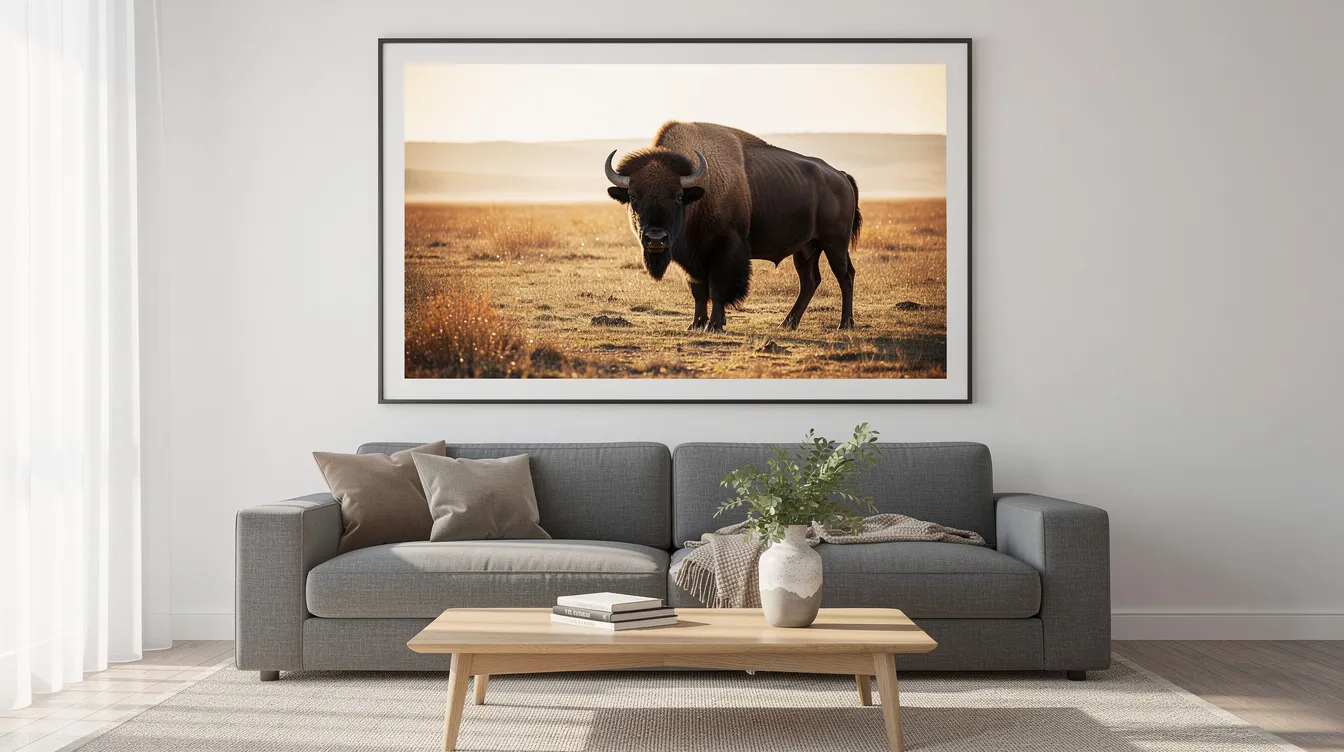
Jardene Photography’s fine art prints are priced from approximately CAD $125 for smaller sizes to $850 for large limited editions, helping you match print size to budget when investing in premium photo prints.
Paper Types and Finishes: Matching the Look to Your Space
Paper type has as much impact on the feel of a print as the image itself. The same photograph can look bold and punchy or soft and painterly depending on the surface beneath the ink.
Prints are available in glossy, matte, and lustre finishes-plus specialty options. Here’s what each delivers:
- Glossy prints enhance colours with deep contrast and vibrancy. A glossy finish makes wildlife images pop but shows fingerprints and reflections. Best in low-glare hallways or behind UV glass.
- Lustre prints have a hint of sheen without high reflectiveness-a balanced choice for living rooms and offices. Popular among photographers for landscapes and portraits.
- Matte finishes provide a non-reflective surface that minimizes glare, ideal for bright rooms or minimalist décor.
- Pearl prints offer a pearlescent shimmer with vibrant colours, sitting between lustre and glossy.
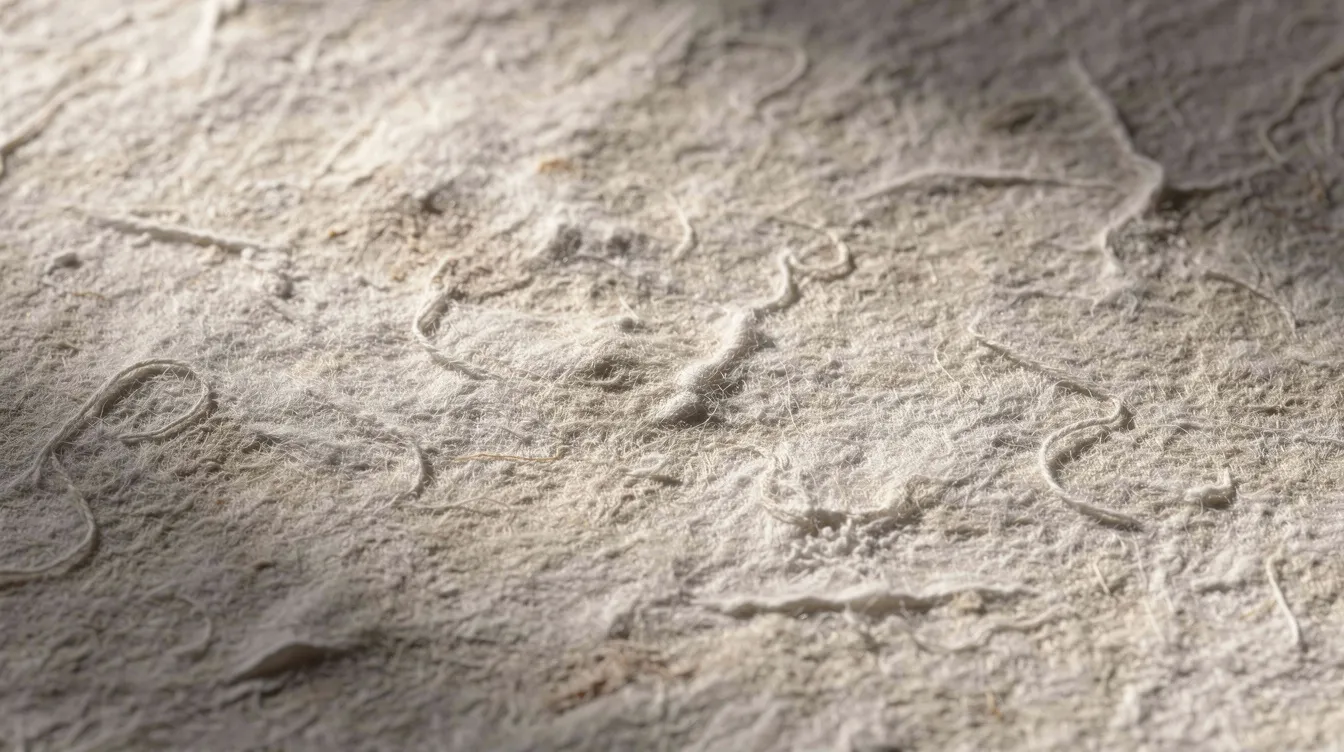
- Fine art rag / cotton papers suit black-and-white photography, moody mountain scenes, and painterly aurora images. High-end fine art papers are usually measured in GSM (grams per square metre), often 300+ gsm for museum-grade stock.
Room-based suggestions:
- Bright sunlit room ? matte or fine art rag
- Controlled gallery lighting ? lustre or glossy
- Modern condo ? lustre or pearl
- Rustic Alberta cabin ? textured rag or canvas prints
Jardene Photography commonly uses archival lustre and fine art cotton papers via ArtBeat Studios-chosen specifically because they render the subtle gradients of Canadian Rockies skies and the texture of wildlife fur with exceptional quality.
Premium vs. Standard Prints: When to Invest in Professional Photo Printing
Not every picture needs premium treatment. A birthday party collage for the fridge? Standard is fine. But certain images and moments deserve professional photo printing.
Standard lab prints typically use dye-based inks on thin paper with limited quality control. They’re practical and cost effective for casual pics-but dye prints may show noticeable fading within 25–30 years under display conditions.
Premium photo prints use pigment inks on archival papers, are produced on calibrated printers, and undergo manual inspection. Modern pigment ink systems like Epson’s UltraChrome HDX claim display permanence ratings exceeding 200 years for colour and 400+ years in dark storage for black and white.
When premium is worth it:
- Limited edition nature prints you’ll display for life
- Heirloom family portraits or a once-in-a-lifetime trip to Banff or Jasper
- Corporate office installations that need to look sharp for years
- Gift ideas for friends and family who appreciate art
Jardene Photography positions every print as a fine art product: limited edition runs, signed and numbered, with careful packaging suitable for collectors and galleries. Our printing options include framed prints, mounted prints, metal prints, and canvas prints.
Mix your approach: use affordable services for everyday snapshots, and invest in premium fine art prints when your memories deserve museum-style permanence.
From File to Wall: Preparing Your Photos for the Best Print Quality
Whether you’re a seasoned photographer or a hobbyist capturing your first order of prints, file preparation directly affects the final result.
Basic file prep:
- Export as high-resolution JPEG or TIFF in sRGB (or Adobe RGB if your lab supports wider gamut) at 240–300 dpi for the chosen print size.
- Avoid over-brightening aurora or night sky shots-preserve highlight detail in snow-covered peaks and keep shadows textured.
- Apply output sharpening tuned for print rather than screen display. Print sharpening typically needs to be slightly stronger than what looks ideal on a monitor.
For advanced users:
- Use ICC profiles from the printing service to soft-proof and preview how paper and ink will render subtle skies and wildlife fur. Colour correction at this stage prevents surprises.
- Check for colour cast under different simulated lighting conditions.
Pre-flight checklist:
- [ ] Remove sensor dust spots
- [ ] Straighten horizons in landscape photography
- [ ] Crop to exact aspect ratio of chosen print size
- [ ] Verify contrast and tonal range across highlights and shadows
- [ ] Confirm file dimensions match the intended print size
If you order from Jardene Photography’s store, we handle all of this behind the scenes. Every file is optimised specifically for the selected medium and size before it reaches the press, so customers receive prints that match what the photographer intended.
Displaying and Protecting Your Photo Prints for Decades
Even the best printed photograph needs proper display and care to stay beautiful for decades.
Framing basics:
- Use acid-free mats and backing boards to prevent chemical migration
- Choose UV-protective glazing (glass or acrylic) to slow fading
- For larger print sizes like 24×36″ and up, solid backing prevents waviness and warping over time
Placement tips:
- Avoid prolonged direct sunlight on vibrant aurora or sunset scenes
- Keep prints away from bathrooms and kitchens with high humidity unless properly sealed or face-mounted under acrylic
- Hang at eye level (centre of the image roughly 57–60 inches from the floor)
Display formats and where they work:
| Format | Best For |
|---|---|
| Framed prints | Traditional homes, offices, hallways |
| Floating frame | Modern interiors, gallery feel |
| Mounted / face-mount acrylic | Sleek condos, high-contrast images |
| Canvas prints / gallery wrap | Rustic or casual spaces |
Care advice: gentle dusting with a soft cloth, never touching the print surface, and periodic inspection for warping or fading. Jardene Photography’s prints are produced on archival materials designed for longevity in normal indoor environments-making them suitable as long-term wall decor and collectible fine art.
Why Quality Matters for Nature & Wildlife Art Collectors
There’s a difference between scrolling past a stunning wildlife shot on Instagram and standing in front of a large, crafted print of the same animal. One disappears in a second. The other anchors a room and changes how you experience a space every single day.
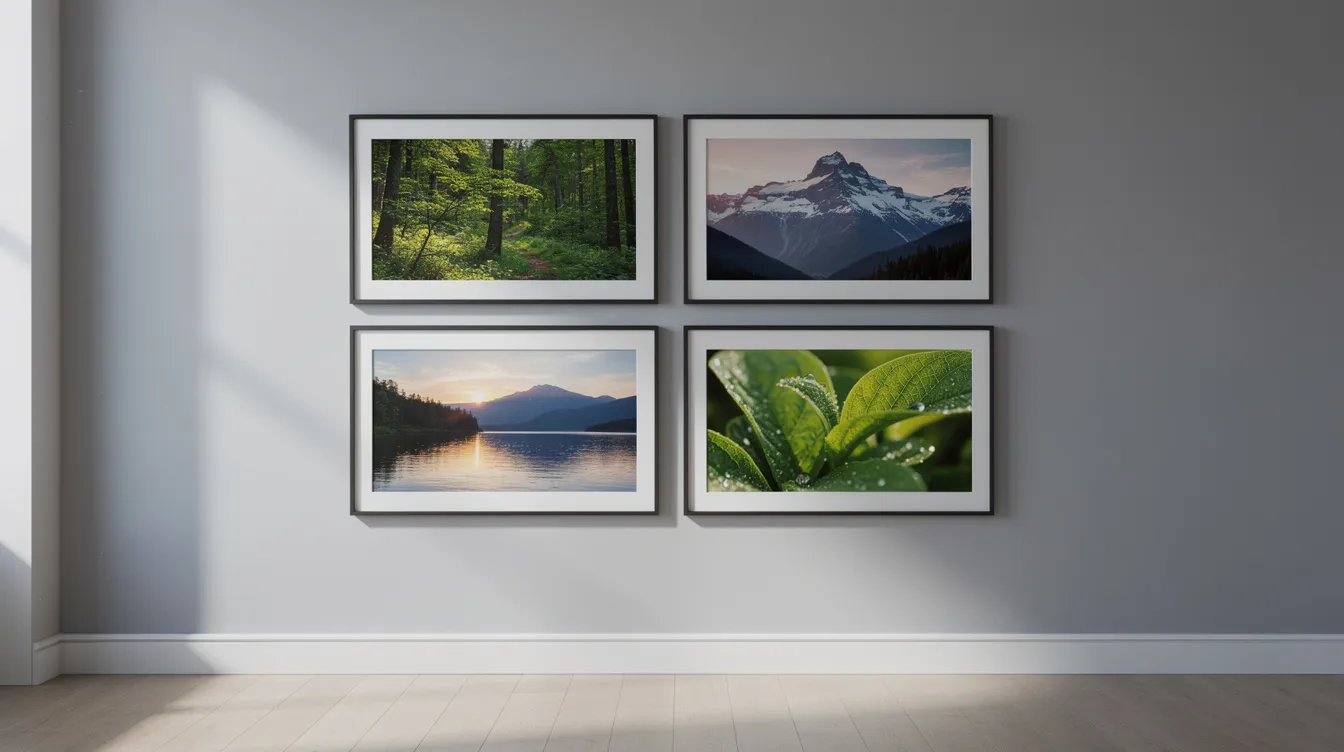
Fine detail and accurate colour are non-negotiable for nature art. The texture in bison fur, subtle alpenglow on the Rockies, the gradation of greens in Alberta forests, faint stars threaded through an aurora-these demand a printing process that preserves every nuance. That level of detail only comes from archival pigment inks on carefully chosen paper, printed at high resolution, and inspected by someone who knows what to look for.
Limited edition prints hold particular value for collectors: fixed print runs, artist signatures, numbered certificates, and the knowledge that only a handful of identical pieces exist. A large premium photo print becomes a conversation piece-anchoring a living room with a sense of place, whether that’s Banff, Kananaskis, or Waterton Lakes.
Jardene Photography’s wildlife photography prints and landscape fine art photography are created to serve as both décor and a personal connection to wild places in Alberta and the Canadian Rockies. Every featured collection reflects new products and fresh inspiration from seasons spent in the field.
Jardene Photography’s Commitment to Craft, Community, and Conservation
What sets Jardene apart in the world of quality prints comes down to three things: craft, community, and conservation.
The photographer: Andy Denton is Alberta-based and award-winning, holding a Craftsman degree in Nature Photography and advancing toward a Master’s degree. Years of fieldwork across the Rockies and prairie ecosystems inform every image in the collection-capturing moments that artists and photographers spend lifetimes pursuing.
Production standards: every print is produced through ArtBeat Studios using archival papers and pigment inks, with careful proofing and a 100% Satisfaction Guarantee. You can see exactly what’s included with every fine art print.
Pricing: prints range from approximately CAD $125 to $850 depending on print size and finish, with limited editions and open editions available.
Conservation: 15% of profits are donated to the Alberta Institute for Wildlife Conservation, supporting wildlife rehabilitation and education in the region. Every print purchase directly funds the preservation of the animals and landscapes in the photographs.
Browse Jardene’s online gallery of premium fine art prints-landscapes, wildlife, bison, and aurora images-choose a print size and paper type that fits your space, and bring a piece of Alberta’s wild beauty into your home. Your memories deserve nothing less.