Introduction: Why Landscape Photography Still Matters in 2026
Picture this: it’s 5:14 am in late June 2025, and the first light catches Mount Rundle above Vermilion Lakes near Banff. The sky shifts from deep indigo to molten peach in under four minutes. The mountains, the water, the clouds-they align into something that demands to be preserved. That scene is gone by 5:20 am. Landscape photography exists to capture these memorable moments before they vanish.
At its core, landscape photography is the art of recording the character of land, sky, and atmosphere-from untouched alpine tarns surrounded by ice to urban riverfront skylines at dusk. It is both experience and expression: the early alarms, the cold fingers, the patience, and then the reward of turning that effort into landscape photos and fine art prints that live on walls for decades.
At Jardene Photography, we’re an Alberta-based operation turning fieldwork across the Canadian Rockies, the Prairies, and everything in between into collectible prints. This article moves from inspiration to concrete camera settings, composition techniques, and how to turn great landscape photos into museum-quality fine art prints. As a bonus, 15% of our profits support the Alberta Institute for Wildlife Conservation-so every print purchased directly supports nature alongside your decor.
What Is Landscape Photography? (Beyond Just “Pretty Views”)
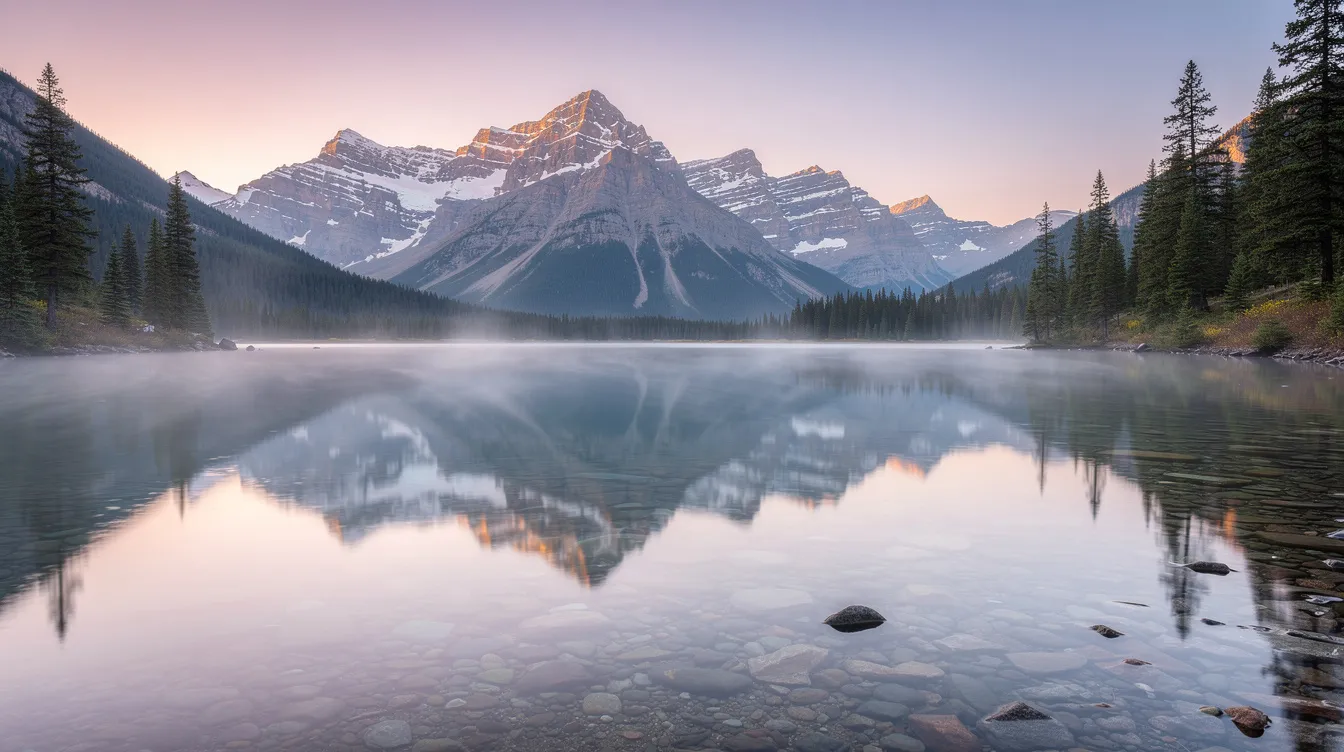
Landscape photography is an umbrella genre that captures vast vistas and close details of environments alike. Common subjects include mountains, forests, rivers, deserts, oceans, and urban skylines. The genre aims to convey a sense of place, scale, and emotion-not just to document, but to make you feel something about the world outdoors.
In Alberta alone, the range is enormous. There’s the drama of Banff’s peaks, the sculptured badlands near Drumheller, the wide prairie sky over wheat fields, and even urban landscape photography along Calgary’s Bow River pathway at sunset. Modern practice blends traditional landscape with night photography-think aurora arcs and the Milky Way over dark sky preserves-and even wildlife elements like bison herds grazing near Elk Island National Park.
Professional landscape photography balances documentary truth with artistic interpretation. Choices of lens, shutter speed, weather conditions, and post-processing all shape how a scene reads. Many landscape photographers think in series or bodies of work rather than isolated landscape pictures-a multi-year Canadian Rockies collection, for example, or a four-season study from a single viewpoint in Jasper. This approach reveals patterns across time and light that no single photo can communicate.
Core Gear for Landscape Photographers (Without the Hype)
You don’t need the newest flagship camera. Many of our gallery pieces from 2018–2022 were captured on mid-range full-frame bodies. What matters is reliable, weather-ready gear that performs when conditions get rough.
The essentials: a camera body (mirrorless or DSLR), at least one wide-angle lens in the 16–35 mm range, and one longer lens around 70–200 mm. Wide-angle lenses are preferred for capturing expansive landscapes-think the shoreline foreground rocks at Moraine Lake stretching toward the Valley of the Ten Peaks. Telephoto lenses can isolate and emphasize distant landscape features, like compressing hazy autumn mountain layers in Kananaskis with a longer focal length. Each camera lens you carry serves a distinct purpose, and the interplay between them gives you creative range.
A tripod is essential for landscape photography stability-non-negotiable for long exposures, panoramic format stitching, and low-light work. Add a polarizing filter that fits your primary lens, and you have the foundation for stunning landscape photos in nearly any condition. Weather sealing matters in Canadian conditions: blowing snow at Abraham Lake in January or spring rain in Waterton Lakes National Park will test any setup.
Optional but useful items include neutral density filters, a remote shutter release, microfiber cloths for snow and spray, and a hiking pack suited for 10–15 km days in the backcountry.
Essential Camera Settings for Great Landscape Photos
Understanding aperture, shutter speed, and ISO is what separates snapshots from professional landscape photography, regardless of which camera brand you shoot. Getting your camera settings right in the field saves hours of frustration in editing and means the difference between a sharp image on a gallery wall and one that falls apart at print size.
Photographers typically use narrow apertures between f/8 and f/16 for deep depth of field. Aperture f/8 is ideal for sharp landscape images in most daytime scenarios. When you need everything from foreground wildflowers to distant mountains in focus-say, shooting at Peyto Lake in July-a small aperture of f/11 to f/16 increases depth of field significantly. Shooting at f/11 or f/16 maximizes depth of field, though pushing past f/16 introduces diffraction that softens the image. Maximizing depth of field usually requires careful aperture selection and focusing, sometimes using focus stacking, which blends multiple shots at different distances for sharpness across the entire scene.
Use ISO 100–400 for low noise in landscape photos. A low ISO setting, typically 100–400, helps maintain image quality and clarity, which matters enormously when preparing files for large fine art prints. Higher iso settings are sometimes necessary-handheld twilight scenes in a national park when you can’t deploy a tripod, for example-but keep ISO as low as the situation allows.
For shutter speed, a useful rule: shutter speed should be double the focal length for a sharp image when shooting handheld. Fast shutter speeds reduce camera shake in handheld photography-critical when freezing blowing snow on Highwood Pass at 1/500 s. Conversely, a slower shutter speed of 0.5–2 seconds on a tripod creates silky water effects in Johnston Canyon. Management of exposure can include shooting in RAW and using bracketing to handle high dynamic range scenes. Shooting in RAW format preserves image data for better editing flexibility, which is non-negotiable for professional photographers preparing files for print.
Many landscape photographers prefer aperture priority mode with exposure compensation, adjusting quickly as light shifts during a sunrise sequence. Full manual mode makes sense for controlled situations-aurora, moonlit snow fields-where consistency across frames matters more than speed.
Light, Weather, and the Power of Golden Hour
Chasing the best light is crucial for landscape photography success. A mediocre location in extraordinary light will always outperform a world-class location under flat noon sun. Natural light is preferred for landscape photography, and the difference between midday harsh light over Lake Louise in July and a 6:00 am golden hour in late September with first frost is the difference between a forgettable snapshot and a photograph worth framing.
Golden hour occurs just after sunrise or before sunset, when the sun sits low and casts warm, directional light across the land. Landscape photography often utilizes natural light during early morning or late afternoon, when shadows are long and textures come alive. At Banff’s latitude of 51°N, golden hour stretches generously in summer but compresses to a narrow band in December, with blue hour dominating the winter sky.
Weather creates mood. Chinook arch clouds over Calgary, October snow squalls in Kananaskis, summer thunderheads rolling across prairie fields-each adds drama to landscape photographs that calm, clear skies simply cannot match. Professional photographs often result from patience and careful observation of light, and landscape photographers plan around weather forecasts, cloud cover predictions, wind speed, and aurora KP indices to decide whether to chase sunrise at Moraine Lake or stay low in valley fog near Canmore.
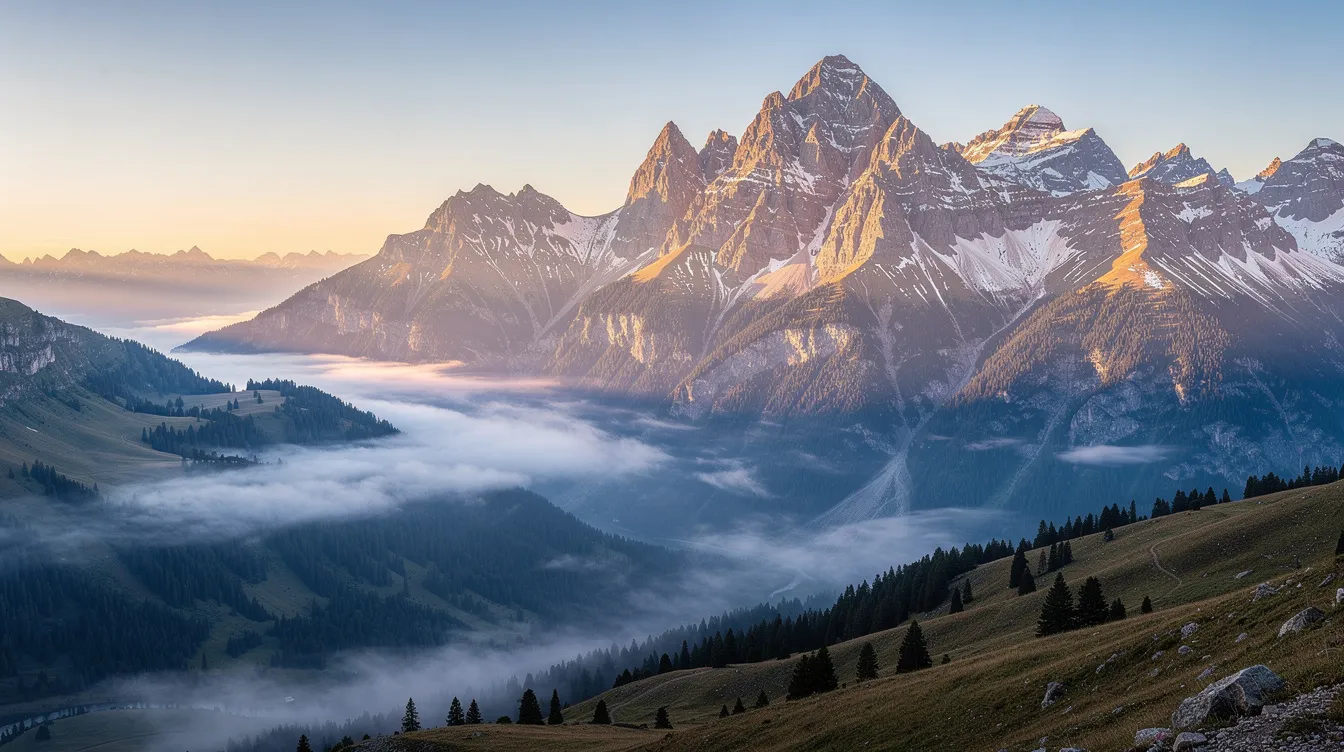
Here’s a concrete scenario: arriving 45–60 minutes before sunrise at Bow Lake on a calm September morning. You watch light move from deep blue to pink alpenglow on the peaks, then warm side-light fills the valley. In that single hour, you capture three distinct moods. Visiting locations at different times enhances understanding of light, which is why we often revisit the same Canadian Rockies viewpoint across seasons and years to build a fine art series that showcases the best light each season offers.
Composition Fundamentals: From Leading Lines to Storytelling
Composition is what turns familiar locations-like Morant’s Curve or Spirit Island-into original, great landscape photos that feel personal rather than postcard-generic. You can stand where National Geographic photographers have stood and still create something entirely your own through composition choices.
Leading lines guide the viewer’s eye through the image. A snow-covered trail in Banff curving toward distant peaks, the Icefields Parkway sweeping into the background, or driftwood lines on Abraham Lake’s shoreline drawing the viewer’s attention toward frozen methane bubbles-these all pull the eye deeper into the scene. Using a strong foreground element can create depth in landscape photography, and including interesting foreground subjects helps draw the viewer into the landscape rather than letting their gaze slide off the frame.
The rule of thirds divides the frame into nine squares using a thirds grid or thirds overlay. Place the horizon line in the top third for foreground emphasis when wildflowers or water reflections deserve prominence. When shooting landscapes at Two Jack Lake, centring a near-perfect reflection breaks the thirds rule deliberately-and it works, because balance and symmetry create visually appealing landscape images. A well-composed horizon line enhances landscape imagery whether you place it high, low, or center.
Consider visual weight: pair a small bright main subject-a tent, a figure, a sunlit tree-against a larger, darker mountain mass on the opposite side of the frame. Framing uses natural elements like trees or rock arches to direct attention to the subject. Change your point of view: lie low among wildflowers near Sunwapta Falls, or climb a safe high vantage to read a river’s S-curve from above. The “visual story” emerges when a single frame suggests season, weather, and mood-a lone bison walking through a snowstorm near Elk Island as a quieter, more contemplative landscape photograph that captures a scene of isolation and life in harsh beauty.
Filters, Tripods, and Other Small Tools That Make a Big Difference
Simple accessories often improve landscape photos more than upgrading your camera body. Filters like ND and circular polarizers enhance landscape photos by managing light and reflections, and they cost a fraction of what a new lens runs.
Polarizing filters enhance colours and reduce glare in landscapes. On a practical level, a circular polarizer darkens midday blue skies over Waterton, cuts glare on lakes like Minnewanka, and deepens fall colours in the larch forests around Lake Agnes. Rotate the filter while looking through the viewfinder until reflections vanish and the sky saturates-it’s that straightforward.
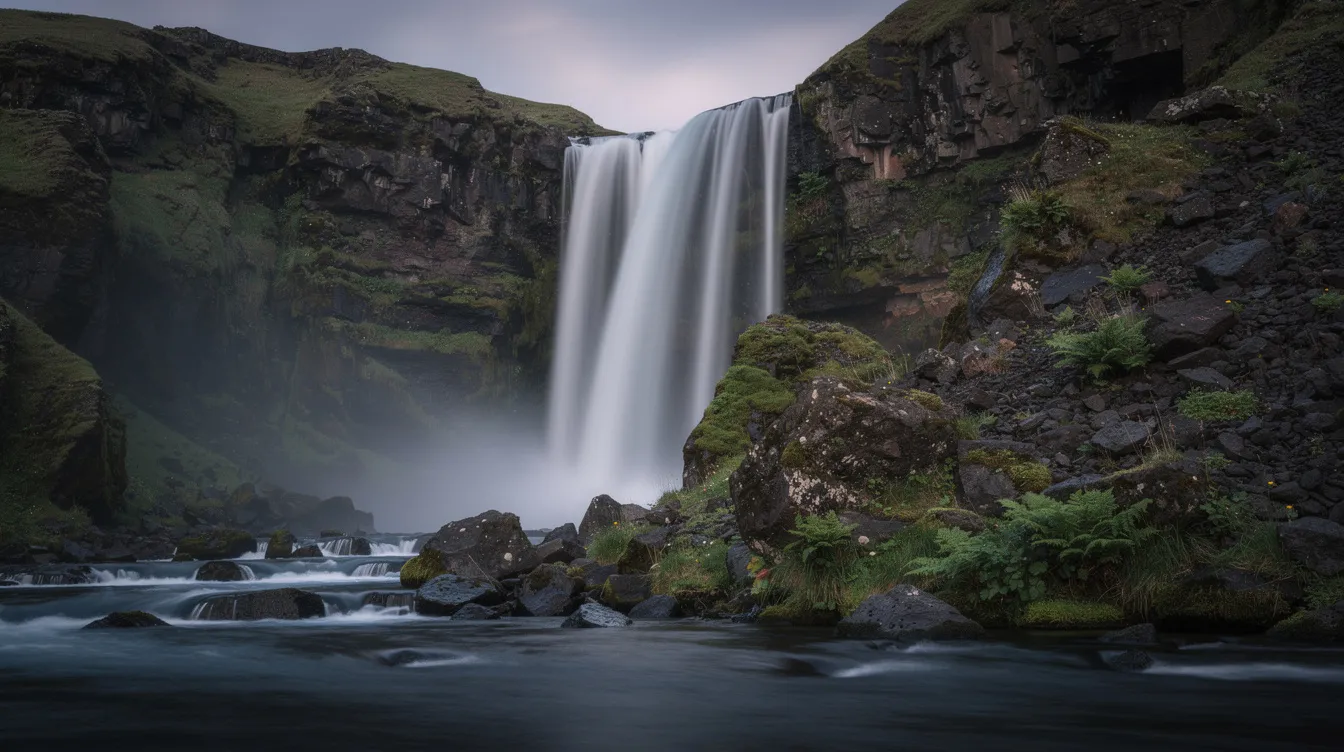
Neutral density filters open up creative shutter speed control. Long exposure photography creates smooth effects by blurring moving elements: softening waterfalls at Takakkaw Falls, smoothing wind-blown water on Spray Lakes, or streaking clouds over Mount Assiniboine in panoramic format. A 6-stop or 10-stop ND filter turns a 1/30 s exposure into several seconds, transforming motion into texture.
Your tripod provides rock-solid support for sunrise panoramas, long-exposure Milky Way work near Jasper’s Dark Sky Preserve, and low-ISO twilight shots in dense forest. Extend legs properly on uneven talus, hang your backpack underneath for stability in strong Kananaskis winds, and use a 2-second timer or remote release to eliminate vibration.
Don’t overlook simple field items: a headlamp with red mode for pre-dawn hikes, lens cloths for snow and spray, and weather covers or garbage bags for sudden mountain storms that roll in without warning.
Planning and Safety in the Canadian Outdoors
Shooting landscapes in Banff, Jasper, and Yoho is as much about planning and safety as aesthetics. Planning is essential for capturing specific landscape moments, and skipping preparation in remote mountain terrain is a risk no photograph is worth.
Scouting locations improves composition and lighting opportunities. Before heading out, check Parks Canada trail reports, avalanche bulletins in winter-especially Kananaskis Country advisories-sunrise and sunset times, and road closures on Highway 93. Researching locations can reveal good viewpoints and areas of interest that other photographers may overlook.
Wildlife awareness is critical. Keep distance from elk in rut near Jasper townsite, bison near Elk Island, and bears on popular trails around Moraine Lake Road. Carry bear spray. Respect seasonal closures. Taking photos of nature should never come at the cost of disrupting it.
A basic safety kit for a typical sunrise hike to a viewpoint like Parker Ridge or Tunnel Mountain includes layers for temperature swings from -10°C to +20°C, microspikes in shoulder season, a map or GPS backup, extra batteries kept warm in inner pockets for cold conditions, and sufficient food and water. Stay on marked trails in fragile alpine meadows near Sunshine Meadows, respect closures protecting nesting birds or restoration sites, and leave no trace around lakes and waterfalls. A trip to the same location at different times can greatly improve photography skills, and successful landscape photography often requires multiple visits to a location-but each visit should leave the land exactly as you found it.
From Digital File to Fine Art Print on Your Wall
There’s a direct line between standing in -25°C taking photographs of the aurora over Abraham Lake in February and the final reward: a large, meticulously crafted fine art print hanging in a Calgary living room or Toronto office. The digital workflow bridges that gap.
It starts with RAW files. Careful colour correction matches real Canadian dusk tones. Local dodging and burning guide the eye through the scene. Lens correction straightens ultra-wide distortion. Editing enhances but should not oversaturate natural beauty in landscape photography-the goal is to honour what was actually there, not to create a fiction.
Preparing files specifically for fine art prints means checking sharpness at target print size. For a 24×36 inch print at 300 DPI, you need roughly 7,200 × 10,800 pixels. For larger prints-40×60 inches viewed from several feet away-150–200 DPI suffices, but detail still needs to hold up under close inspection. Soft-proofing for different papers ensures that the saturated sky in your image doesn’t clip when printed on matte archival stock versus glossy aluminum.
Jardene Photography offers archival paper prints, aluminum and acrylic face mounts, and canvas gallery wraps in sizes from roughly 16×24 to 40×60 inches, priced from approximately CAD $125 to $850. All orders through our online store are produced by ArtBeat Studios with a 100% Satisfaction Guarantee, shipping across Canada plus select international destinations. You can explore the full range of options on our What’s Included page.
Every print of a Banff sunrise, prairie thunderstorm, or bison herd helps fund the Alberta Institute for Wildlife Conservation through our 15% profit donation policy. The Canadian wall art market generated approximately USD $930 million in revenue in 2025, with framed artworks among the fastest-growing segments-proof that people still want to live with real art on their walls.
Building Your Own Landscape Portfolio and Style
Think in projects, not one-off successful images. A year-long series on the changing Bow River through Calgary, or a four-season study from the same location in Jasper National Park, will teach you more about light, composition, and your own eye than a hundred random shots from a hundred different places.
Our own portfolio evolved this way. Early work focused on Alberta foothills and local bison. Over time, it expanded to Canadian Rockies peaks, aurora over prairie farmsteads, and select international trips. The depth came from returning-not from chasing novelty. Start close to home: Fish Creek Park in Calgary, nearby coulees, or a local river valley. Practice composition on familiar ground, then extend to weekend trips in Kananaskis or Waterton. Many of the most compelling landscape photographs in the world come from photographers who know one piece of land intimately.
Print your work-even small test prints at first. A screen hides flaws that a physical print reveals instantly: soft focus, colour casts, weak composition. Share your work thoughtfully, engage with other photographers for honest critique, and consider joining local camera clubs or online mentorships to accelerate your growth. Taking photos consistently, studying what works, and printing what you’re proud of is how a scattered collection becomes a cohesive body of art that reflects your life outdoors.
Conclusion: Connecting to the Land Through Photographs and Prints
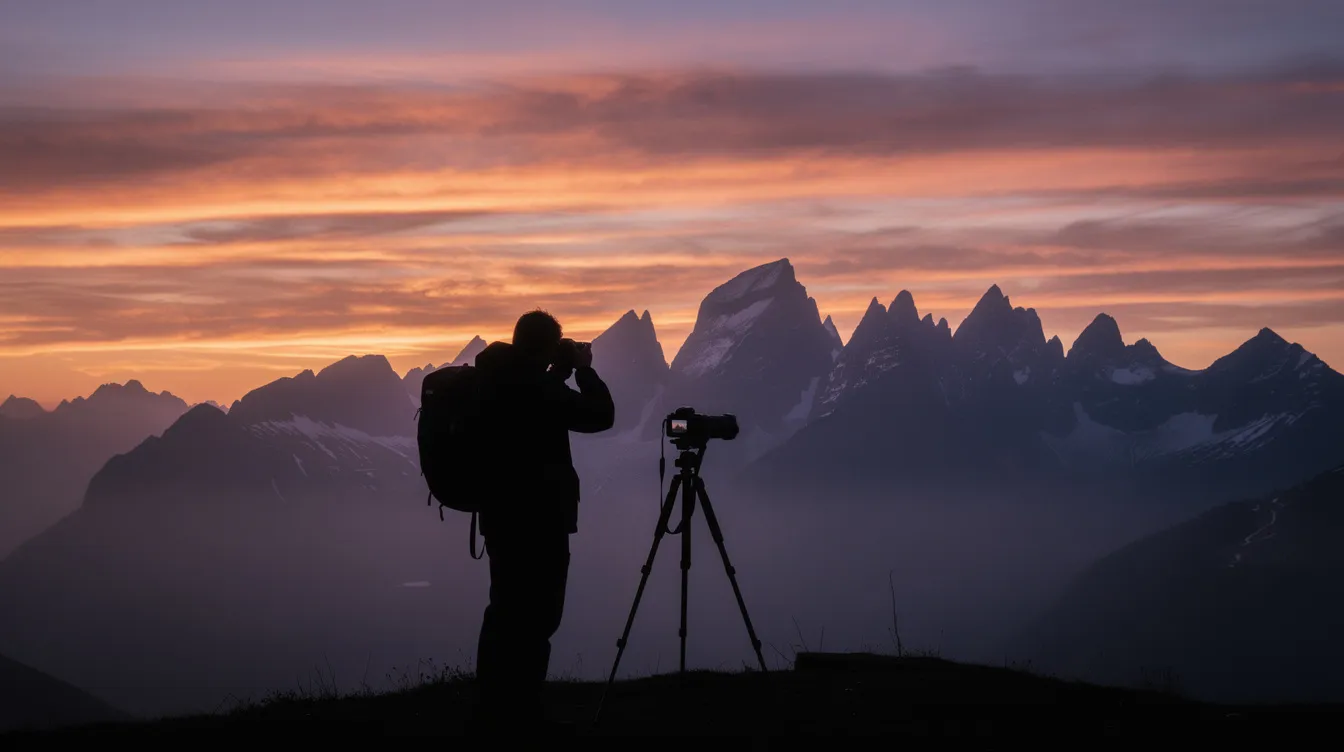
Landscape photography weaves together planning, light, camera technique, and personal vision to create images that outlast a single sunrise or season. Every photograph is a decision-where to stand, when to press the shutter, how to honour the natural beauty of a place while adding your own interpretation. The best landscape photographers in the world share one trait: they show up, again and again, to the same land with fresh eyes.
For Jardene Photography, the goal is twofold: to experience Alberta and the Canadian Rockies deeply in the field, and to craft fine art prints that let others live with those landscapes every day. Whether it’s an aurora over the Prairies, a storm rolling across Waterton, or quiet fog in Kananaskis, each finished print is both artwork and a record of a specific place and moment in nature.
Apply the techniques covered here-careful camera settings, mindful composition, respect for light and weather-to your own local landscapes, wherever you live in the world. And if you’d like to bring the Canadian Rockies into your home, explore Jardene Photography’s online galleries of limited edition and open edition landscape photographs. Every purchase helps support wildlife conservation in Alberta.