Introduction to Wild Animals in Canada
Canada is home to roughly 80,000 recognized species across ecosystems that range from arctic tundra and boreal forests to temperate rainforests and freshwater ecosystems. Few countries on earth offer the sheer variety of wild animals that roam freely here, from 725-kilogram bull moose wading through northern lakes to polar bears patrolling Hudson Bay sea ice. Biodiversity hotspots in Canada include Ontario, British Columbia, and Quebec, each harbouring distinct communities of iconic wildlife shaped by climate, geography, and millennia of ecological balance.
This guide covers how and where to see the most compelling Wild animals in Canada, from grizzly bears on salmon rivers to beluga whales in the Canadian Arctic. We move quickly through the headline species, then dig into seasons, photography techniques, conservation efforts, and how wild encounters become fine art prints. At Jardene Photography, we are an Alberta-based wildlife and landscape photography studio that spends hundreds of days each year in Canadian national parks and backcountry corridors. Our limited edition prints capture the quiet drama of dawn mist over Vermilion Lakes, a Canada lynx ghosting through spruce, or bison shouldering through winter snow in Banff. Every image starts with a respectful, patient encounter in the field.
Where to See the Most Iconic Canadian Animals Fast
Wildlife observation is popular in Canadian national parks, and if your time is limited, these itineraries concentrate the most iconic species into tight routes.
| Itinerary | Duration | Key Parks | Target Species |
|---|---|---|---|
| Calgary -> Banff -> Jasper loop | 5 days | Banff, Jasper, Kananaskis | Black bears, grizzly bears, bighorn sheep, moose, gray wolves |
| Vancouver Island coastal circuit | 3 days | Pacific Rim, Telegraph Cove | Killer whales, black bears, bald eagles |
| Churchill & Hudson Bay | 4 days | Wapusk NP, Churchill estuary | Polar bears, beluga whales, Arctic foxes |
| Newfoundland coastal drive | 3–4 days | Gros Morne, Witless Bay | Moose, Atlantic puffin colonies, and humpback whales |
| Algonquin & Southern Ontario | 3 days | Algonquin Provincial Park | Moose, wolves, common loons, and beavers |
Jardene Photography plans field trips around these hotspots year-round to create fine art prints. Browse Our Parks in Alberta for a closer look at the landscapes behind our Rockies collections.
Black Bears – Canada’s Most Frequently Seen Bears
Canada is home to approximately 500,000 bears, including black bears and grizzly bears, and the black bear is by far the most commonly encountered. In Alberta alone, black bears occupy roughly 75 % of the province, with an estimated 40,000 animals across public and private lands. They thrive in every province and territory with sufficient forest cover.
Telling black bears from grizzlies is straightforward once you know the cues: no pronounced shoulder hump, a straighter facial profile, shorter claws, and smaller overall size. Colour varies widely; many “black” bears in western Canada are actually cinnamon or blond, a common source of misidentification in the Rockies.
Where to see them: The Bow Valley Parkway and Icefields Parkway in Alberta are reliable corridors, along with Yoho National Park and Vancouver Island logging roads. In eastern Canada, dense forests in Ontario and Quebec harbour healthy populations as well.
Safety essentials:
- Stay in your vehicle during roadside sightings
- Use a zoom lens of at least 300 mm rather than approaching
- Never feed bears; carry bear spray on hikes
- Keep a safe distance of at least 30 metres
Black bears frequently appear in Jardene Photography’s Rocky Mountain collections, captured foraging on dandelions or crossing late-spring snow. See our Black Bear Fine Art Print for a close look at the detail we pursue in these encounters.
Fun fact: In the Rockies, black bears typically begin hibernation by mid october or November, but some coastal and urban-fringe bears den for shorter periods or remain semi-active through mild winters.
Grizzly Bears – Powerful Icons of Western Canada
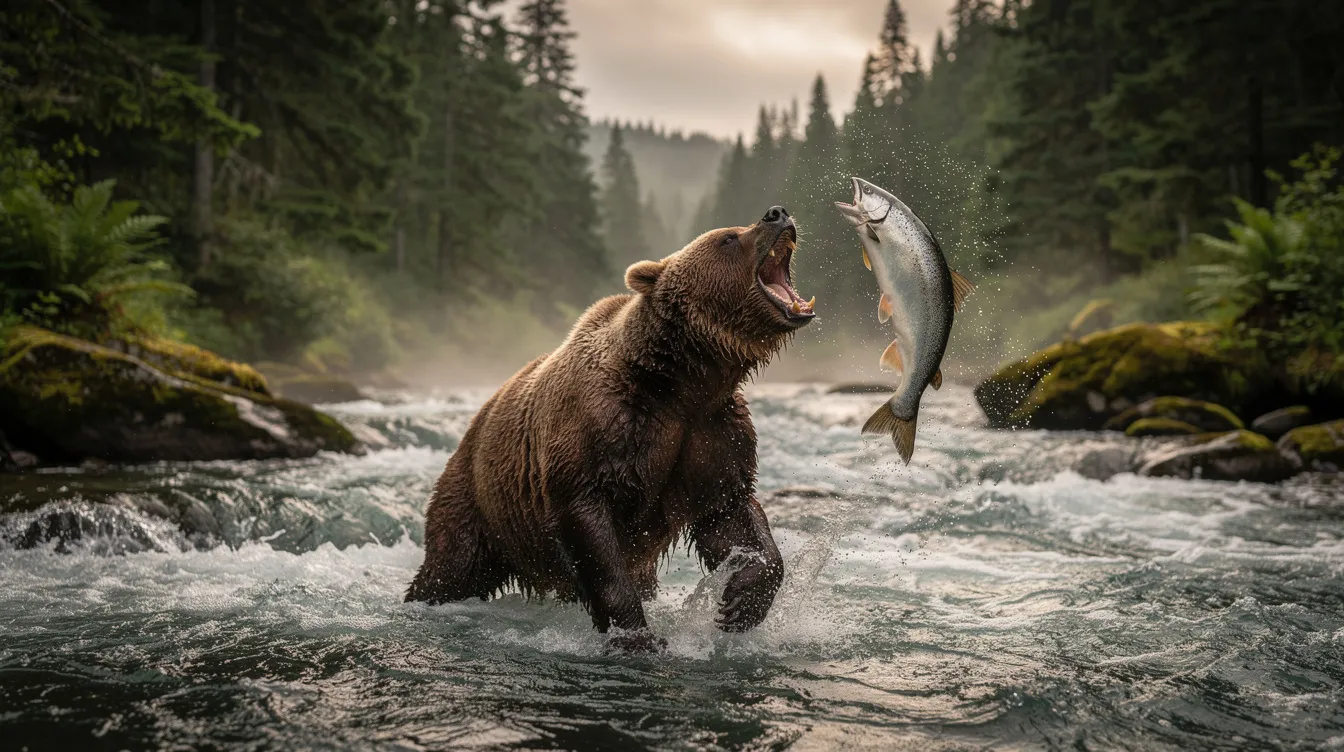
The grizzly bear is among the most powerful predators in North America. British Columbia alone holds an estimated 14,000–16,000 grizzlies, making the province a global stronghold for the species. Additional populations range through Alberta, Yukon, and the Northwest Territories.
Physical identification is unmistakable at close range: a massive shoulder hump of muscle, a concave (dish-shaped) facial profile, and long claws built for digging roots and tearing apart logs. Fur colour runs from pale blond to dark chocolate, sometimes within the same family group.
Prime viewing seasons and locations:
- September–October: Salmon runs on coastal British Columbia – Great Bear Rainforest, Knight Inlet, Glendale Cove
- May–June: Interior Rockies meadows where grizzlies graze dandelions and glacier lilies
- Year-round: Northern BC river valleys and Kananaskis Country
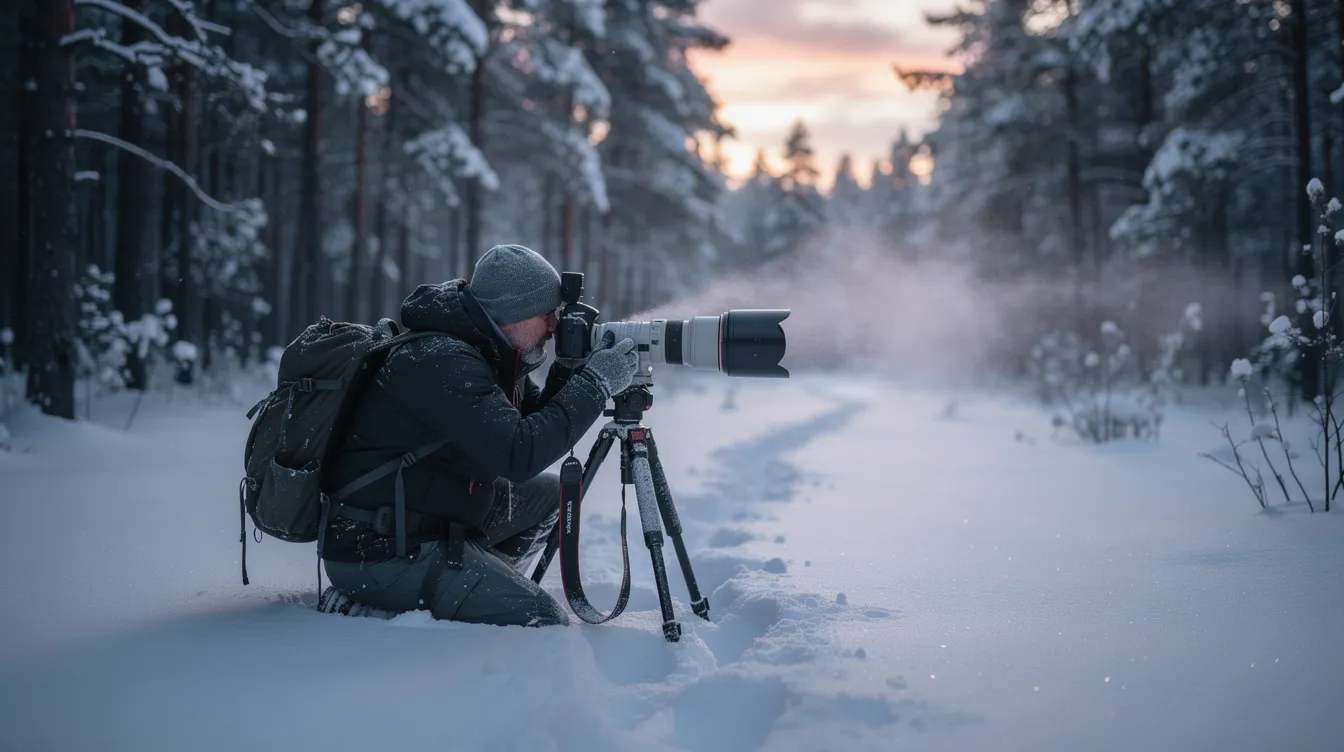
Guided bear-watching tours with licensed tour companies are the safest approach, placing guests on elevated platforms or boats at appropriate distances. At Jardene Photography, we work with local guides and use telephoto lenses up to 600 mm to photograph grizzly bears without disturbance, producing limited edition prints that honour the animal’s dignity.
Fun fact: Before denning, grizzlies enter a feeding frenzy called hyperphagia, consuming up to 40 kg of food daily and packing on more than 150 kg of fat from berries, salmon, and roots.
Canada Lynx – The Elusive Ghost of the Boreal Forest
The boreal forest is Canada’s largest ecosystem, supporting significant biodiversity, and the Canada lynx (lynx canadensis) is one of its most secretive residents. The Canadian lynx can weigh up to 18 kilograms – roughly six times more than a domestic cat – yet it moves through deep snow on oversized, snowshoe-like paws with barely a sound. Tufted ears and a short, black-tipped tail complete a look that is unmistakable when spotted.
Snowshoe hares make up the vast majority of the lynx’s varied diet, and lynx populations cycle dramatically every 8–11 years in lockstep with hare abundance. Densities can swing from about 2 to 45 lynx per 100 km² depending on cycle phase and habitat quality.
Where to look: Boreal forests of northern Quebec and Ontario, Yukon, Northwest Territories, and higher-elevation evergreen forests in Alberta and British Columbia. Sightings are rare due to nocturnal behaviour, but tracks in fresh snow are a reliable sign on quiet winter trails.
Jardene Photography plans winter tracking days in Alberta and northern BC, using blinds and remote cameras to photograph lynx in their natural habitat without disruption.
Fun fact: During population crashes, lynx may disperse over 1,000 km in search of hare-rich territory, sometimes turning up far south of their usual range.
Gray Wolves – Pack Hunters of Canada’s Wilderness
Gray wolves are wide-ranging predators found across virtually every Canadian province and territory. Canada supports roughly 50,000–60,000 wolves, second only to Russia globally. Packs of 5–12 animals structure territories that can exceed 1,000 km², preying primarily on moose, deer, and caribou.
Wolves play a vital role in ecological balance by controlling ungulate populations and triggering trophic cascades that allow vegetation to regenerate. In Canadian parallels to the famous Yellowstone story, wolf presence in Jasper and Banff helps keep elk herds moving, reducing overbrowsing along river corridors.
Realistic viewing areas: Jasper and Banff at dawn, Alberta’s foothills ranchlands, northern Manitoba and Ontario, and coastal British Columbia islands. Early morning and dusk are peak times; patience and silence matter more than any piece of gear.
At Jardene Photography, listening to wolf howls carry across frozen lakes in the Rockies remains one of our defining field experiences – and one that occasionally yields a fine art print worth framing.
Fun fact: A wolf howl can travel up to 16 km across open terrain, and each pack member’s howl is individually identifiable by pitch and cadence.
Moose – Giants of Canada’s Forests and Wetlands
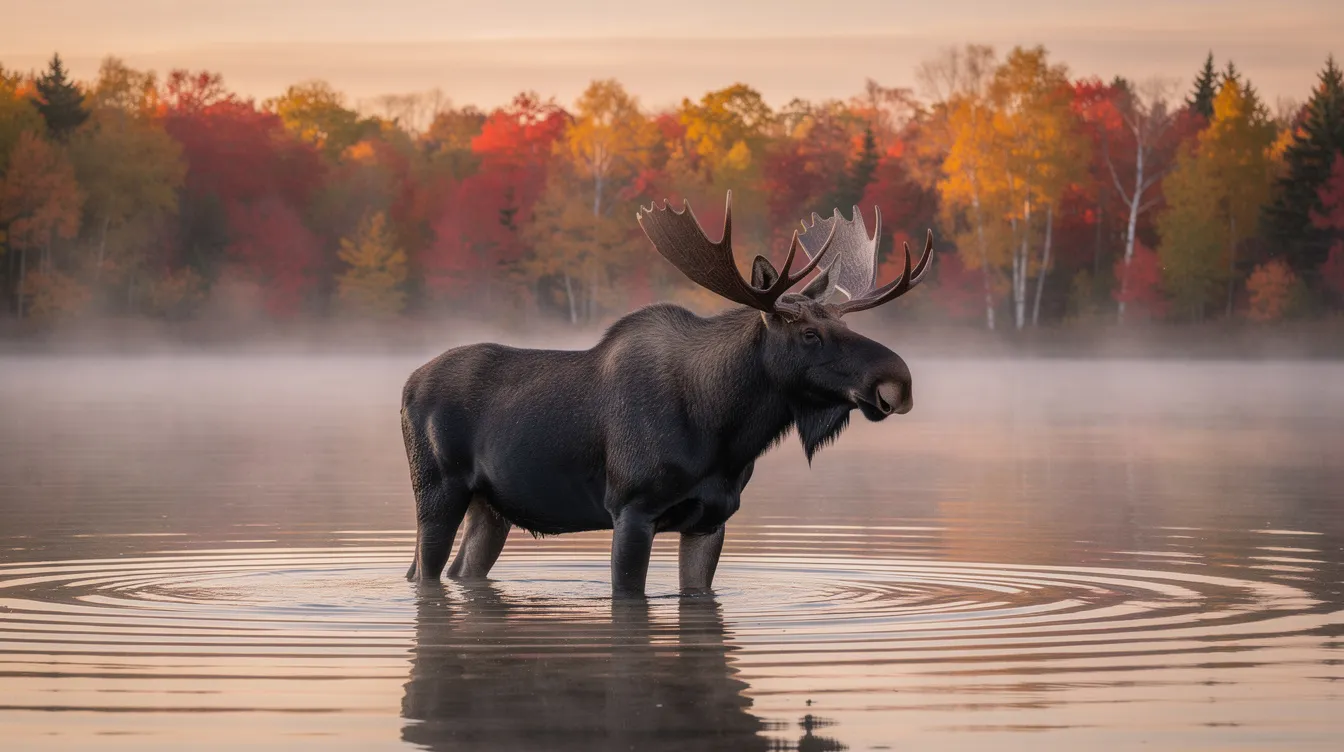
Moose are the largest member of the deer family and Canada’s national animal in all but official title – though the beaver holds that formal honour. The Canadian population of moose is estimated at over 1 million individuals. Adult bulls stand up to 1.8–2 metres at the shoulder, carry impressive antlers spanning 1.5 m or more, and can weigh between 360 and 725 kilograms. Moose are widely distributed across Canada’s boreal and eastern forests, from Yukon to Newfoundland.
Moose are excellent swimmers, regularly crossing lakes to feed on aquatic plants. Bulls grow and shed antlers annually, with rutting behaviour peaking in September–October. Moose are abundant in Gros Morne National Park and equally common in Algonquin Provincial Park, Jasper’s Maligne Lake Road, and Cape Breton Highlands. Alberta’s wildlife includes large mammals such as moose and bison, making the province a reliable destination.
Viewing tips: Watch lakes and marsh edges at dawn and dusk. Keep your distance – moose can be more dangerous than bears in certain situations, particularly on roads and during the rut when bulls charge with little warning.
Moose are a favourite subject for Jardene Photography. See our Bull Moose Close-up Print or our Moose Crossing print for examples of the drama these animals bring to large statement art.
Bighorn Sheep and Mountain Goats – Masters of the Canadian Rockies
Two mountain specialists share the rocky slopes of western Canada: bighorn sheep and mountain goats. Both are native species to the Rockies, and both reward patient wildlife watching with extraordinary photo opportunities.
Bighorn sheep (Ovis canadensis) are recognized by the massive curved horns of mature rams, sandy-brown coats, and a tendency to visit roadside mineral licks. Mountain goats (Oreamnos americanus) sport shaggy white coats, black dagger-like horns, and cling to near-vertical cliff faces that few predators dare follow.
Viewing corridors: Icefields Parkway, Bow Valley Parkway, Kicking Horse Pass, Wilcox Pass, Lake Minnewanka area, and Mount Norquay cliffs. Parks Canada sites like Yoho, Kootenay, and Glacier National Park of Canada also deliver reliable sightings.
At Jardene Photography, we compose images of bighorn sheep and goats against dramatic cliff faces and the Rocky Mountains skyline to create dynamic wall art in our Wildlife Photography Gallery.
Fun fact: Each annual growth ring on a bighorn ram’s horn corresponds roughly to one year of life, allowing biologists to estimate age without capture.
Bison – Prairie Icons and Conservation Comebacks
Bison are Canada’s largest land mammals and among the most culturally significant animal species on the continent. Before near-extinction in the 1800s, tens of millions roamed the Prairies and boreal regions. Today, bison populations in Canada are approximately 10,000 wild individuals – a hard-won recovery.
Where to see them:
- Wood Buffalo National Park – the world’s largest free-roaming wood bison herd; bison can be spotted in Wood Buffalo National Park along highway corridors
- Elk Island National Park – plains and wood bison in a fenced sanctuary east of Edmonton
- Banff National Park – reintroduced plains bison in the backcountry
- Grasslands National Park, Saskatchewan – open prairie habitat
Bison are deeply significant to indigenous peoples across the Plains. Sites like Head-Smashed-In Buffalo Jump in Alberta tell the story of thousands of years of shared history.
Our Alberta base gives Jardene Photography regular access to bison at Elk Island and in Banff’s backcountry. Explore our Bison Photography Gallery for signature prints set against snow, prairie grass, and mountain backdrops.
Fun fact: Bison create shallow depressions called “wallows” by rolling in dry earth, kicking up dust clouds visible from hundreds of metres on summer evenings.
Polar Bears and Arctic Wildlife
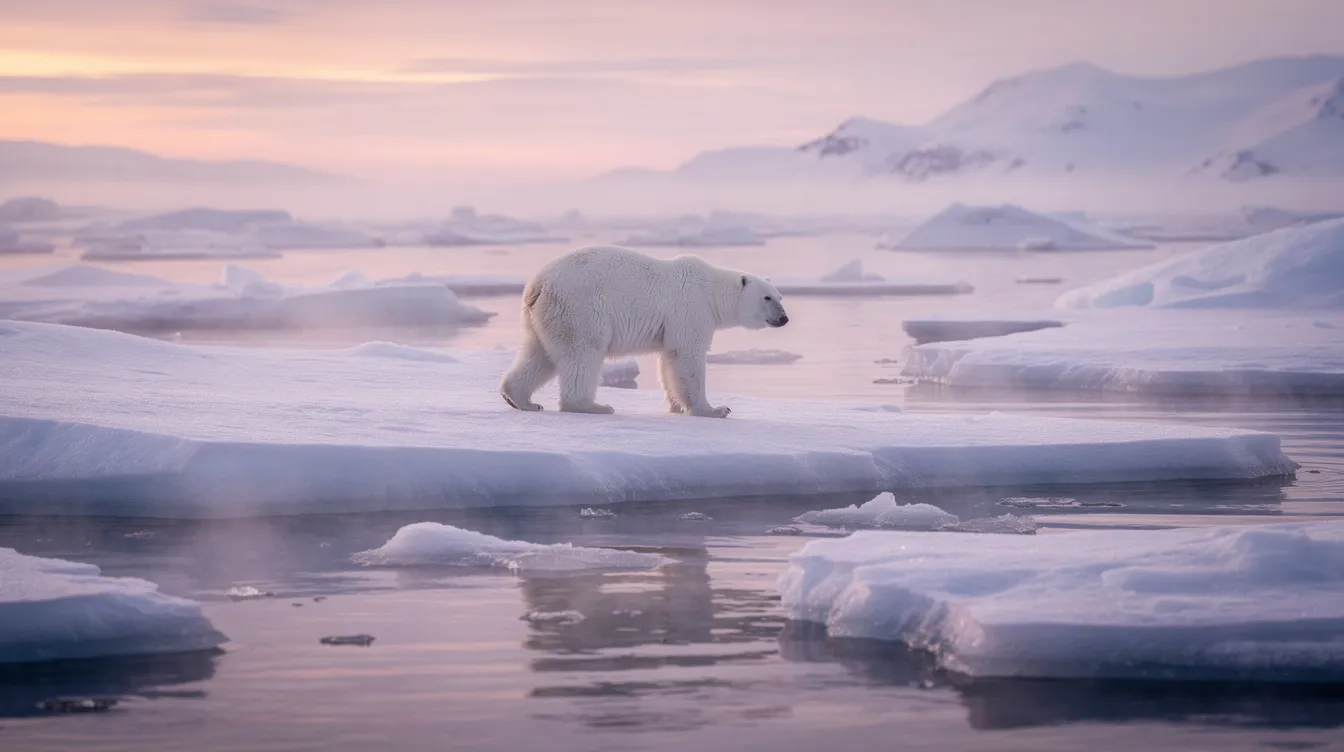
Polar bears (Ursus maritimus) are the apex predators of the Canadian Arctic. Canada is home to approximately 16,000 polar bears, making up about two-thirds of the world’s population. Polar bears can weigh between 900 and 1,600 pounds, making them the largest land carnivores in North America.
Churchill, Manitoba – often called the polar bear capital of the world – and Wapusk National Park are premier viewing locations. Polar bears can be seen in Wapusk National Park from October through November as they wait for Hudson Bay sea ice to form. Tundra vehicles and raised platforms keep visitors at a safe distance while delivering unforgettable encounters.
Beyond polar bears, the Arctic supports muskoxen, Arctic foxes, narwhals, and the iconic arctic wolf, forming a broader wildlife community across protected areas in Canada’s North. However, polar bear populations are vulnerable due to climate change: shrinking sea ice and longer ice-free seasons reduce hunting success and threaten reproductive rates in several subpopulations.
Jardene Photography integrates Arctic trips into our portfolio when conditions cooperate, creating limited edition polar bear prints – occasionally set beneath northern lights.
Fun fact: Polar bear fur is actually transparent and hollow, scattering light to appear white, while the skin underneath is jet black to absorb warmth from the sun.
Whales, Beluga Whales, and Orcas in Canadian Waters
Canada’s three coasts – Pacific, Atlantic, and Arctic – make it one of the best countries on earth for whale watching. Humpbacks, orcas, beluga whales, minke whales, and fin whales all frequent Canadian waters.
Beluga whales are highly social marine mammals found in Arctic waters, known as the “canary of the sea” for their complex vocalizations. Canada is home to approximately 55,000 beluga whales, with the largest summering concentration in Western Hudson Bay. Beluga whales inhabit the Churchill River in summer, and the St. Lawrence Estuary near Tadoussac along the St. Lawrence River hosts a distinct, year-round population. Beluga whales are classified as near threatened in Canada.
Killer whales patrol British Columbia’s coast. Southern resident killer whales are listed as endangered in Canada and inhabit the Salish Sea, while transient (Bigg’s) killer whales range along Vancouver Island and Haida Gwaii – both populations are among the most studied marine mammals on the planet.
Top whale-watching bases: Victoria, Vancouver, Tofino, Telegraph Cove, Saguenay–St. Lawrence Marine Park and Churchill for summer beluga tours. Choose licensed tour operators, maintain legal distances, avoid chasing pods, and minimize noise.
Jardene Photography occasionally collaborates with marine tour companies to photograph whales in natural light suitable for fine art seascape and wildlife prints.
Birdlife Highlights – Bald Eagles, Atlantic Puffins, and Loons
Canada’s birdlife is as diverse as its landscapes. Three photogenic iconic species stand out for wildlife photographers.
Bald eagles concentrate along coastal areas of British Columbia and major rivers and lakes nationwide. Fraser Valley winter gatherings, where eagles feed on salmon carcasses, draw thousands of birds.
Atlantic puffins breed in colonies along Newfoundland and Labrador, especially at Witless Bay Ecological Reserve. Sometimes called “sea parrots,” these compact seabirds are best viewed from boats during the spring and summer nesting season.
Common loons produce haunting calls on lakes across the country – from Ontario cottage country to the Rockies. Common loons are well-known at Lake Wapizagonke in Mauricie National Park, and their image graces the Canadian one-dollar “loonie” coin.
Jardene Photography incorporates birds into both wildlife and landscape compositions, from loons on mirror-calm lakes to eagles soaring against snowy peaks. See our Wood Duck Pictures for another example of avian fine art.
Other Notable Canadian Animals and “Fun Facts”
Canada supports roughly 80,000 recognized species across diverse ecosystems. Here are several more iconic animals worth knowing:
- Beaver: Canada’s national animal, building dams up to 850 meters long (the world’s longest is in Wood Buffalo NP). Beavers are the largest rodents in North America and are estimated to number between 6 and 12 million in Canada.
- Caribou: Once numbering in the millions, caribou herds have declined by over 90% in Canada due to habitat loss and predation shifts. Their image appears on the 25-cent coin.
- Monarch butterfly: Completes one of the world’s longest insect migrations, travelling over 4,000 km from southern Ontario to central Mexico each autumn.
- Canada goose: Capable of reaching flight speeds above 60 km/h during migration, these birds are a least concern species but remain a culturally significant symbol.
- Wolverine: Pound-for-pound, among the strongest mammals on the continent, found in remote boreal forests and alpine zones.
- Prairie dogs: Colonial rodents of the southern Alberta and Saskatchewan grasslands, creating underground towns that aerate prairie soils and support other species.
- Whooping cranes: One of North America’s rarest birds, with a breeding population centred in Wood Buffalo National Park.
Some of these animals – beaver, wolverine, caribou – appear in Jardene Photography’s more intimate, detail-focused fine art prints.
Best Time of Year to See Wild Animals in Canada
| Season | Highlights | Best Regions |
|---|---|---|
| Spring (Apr–Jun) | Bears emerging from dens, newborn calves, and migratory birds returning | Rockies, coastal areas, and boreal forests |
| Summer (Jul–Aug) | Whales, Atlantic puffin nesting, bighorn sheep and mountain goats in high country, moose at lake edges | BC coast, Newfoundland, Rockies |
| Autumn (Sep–Oct) | Elk and moose rut, caribou migrations, peak colour | Canadian Rockies, northern regions |
| Winter (Nov–Mar) | Wolf and lynx tracking in snow, polar bears, and aurora photography | Nunavut, northern Manitoba, Alberta Rockies |
Wildlife viewing is best in Canada during dawn and dusk, when animals are most active, and light is most photogenic. Jardene Photography schedules nearly all shoots around these golden windows. Read more about respectful field practices in our guide to Wildlife Photography Etiquette.
Wildlife Photography in Canada – Tips from Jardene Photography
These field-tested tips inform every fine art print we create across Alberta and beyond.
Gear basics:
- Telephoto lenses (300–600 mm) for maintaining a safe distance
- Sturdy tripod for low-light dawn and dusk shooting
- Weather protection for cameras in snow, rain, and coastal spray
Ethical practices:
- Maintain recommended distances; never bait or call animals
- Avoid blocking animal movement or escape routes
- Prioritize animal welfare over any shot – always
Composition ideas: Place wildlife against Canadian Rockies ridgelines, prairie skies, boreal forests, or Arctic sea ice to create a sense of place. A grizzly in a meadow with no context is far less compelling than one framed by a glaciated peak.
Work with local guides and Indigenous-owned tour companies, particularly in British Columbia and northern Canada, to stay safe and respectful on the land. Many of our Wildlife Photographer Prints Collection clients use these same tips on their own Canadian trips.
From Field to Wall – Turning Canadian Wildlife into Fine Art Prints
At Jardene Photography, we select images that show both animal behaviour and the Canadian landscape surrounding it. A bull moose knee-deep in a Jasper river or a black bear silhouetted against spring snow becomes a statement piece that connects a living room to the wild.
Print options include fine art paper, metal, and acrylic finishes in sizes ranging from intimate desk prints to large wall installations, priced from approximately CAD $125 to $850. Every print is produced through ArtBeat Studios in Canada using archival materials for colour accuracy and longevity. Learn exactly what’s included with Fine Art Prints on our site.
Customers often choose specific animals – grizzly bears, Canada lynx, bighorn sheep, beluga whales – to reflect personal travel memories. Interior decor ideas range from a large statement piece over a sofa to triptychs mixing wildlife and landscape photography. Every order ships with our 100% Satisfaction Guarantee, and Calgary clients can arrange local pickup.
Conservation, Ethics, and Giving Back to Canadian Wildlife
The biggest threats facing wild animals in Canada include habitat loss, climate change, road mortality, recreational disturbance, and pollution in freshwater ecosystems and coastal areas. Some iconic species are in serious decline; others are recovering thanks to sustained conservation efforts.
Positive stories worth knowing:
- Bison reintroductions in Banff and Grasslands National Parks
- Recovering bald eagle populations across Nova Scotia and BC
- Stewardship by Indigenous communities managing land and animal species across Canada
Jardene Photography donates 15% of profits to the Alberta Institute for Wildlife Conservation (AIWC), and we deliberately choose subjects and locations that do not stress animals. You can help too: support local conservation groups, choose ethical tour operators, obey Parks Canada wildlife rules, and reduce your personal ecological footprint.
Every respectful wildlife encounter and every thoughtfully chosen wildlife print fosters deeper appreciation and protection for the native species that make this country extraordinary.
Planning Your Canadian Wildlife Trip
Three suggested routes:
- Calgary -> Jasper loop (5–7 days): Black bears, grizzly bears, bighorn sheep, moose, wolves, and mountain goats along the Icefields Parkway and in Jasper’s valleys.
- Vancouver Island coastal circuit (3–4 days): Killer whales from Telegraph Cove, black bears, bald eagles, and old-growth rainforest walks.
- Churchill & Hudson Bay (4–5 days): Polar bears in fall, beluga whales in summer, and arctic tundra landscapes.
Packing checklist for wildlife and photography:
- Binoculars and a telephoto zoom lens (300 mm minimum)
- Layers for fast-changing mountain and coastal weather
- Bear spray where appropriate
- Waterproof boots and a rain shell
Check seasonal closures, trail conditions, and wildlife advisories through Parks Canada and provincial park websites before you travel. If you love the idea of bringing nature indoors, explore Jardene Photography’s Wildlife Photography Gallery for inspiration before or after your trip.
Choose one or two must-see wild animals – a grizzly bear, a Canada lynx, or a beluga whale – and build your itinerary around those experiences. The rest of Canada’s iconic wildlife will find you along the way.